
Backed-up drain emergency: what to do first
Standing water in a tub, a gurgling toilet or a floor drain that bubbles when the washer runs all point to a blockage that is moving toward the main line. Acting in the first few minutes keeps a nuisance from turning into a flooded room.
- 1Stop adding water. Pause dishwashers, washing machines and showers until the line is clear.
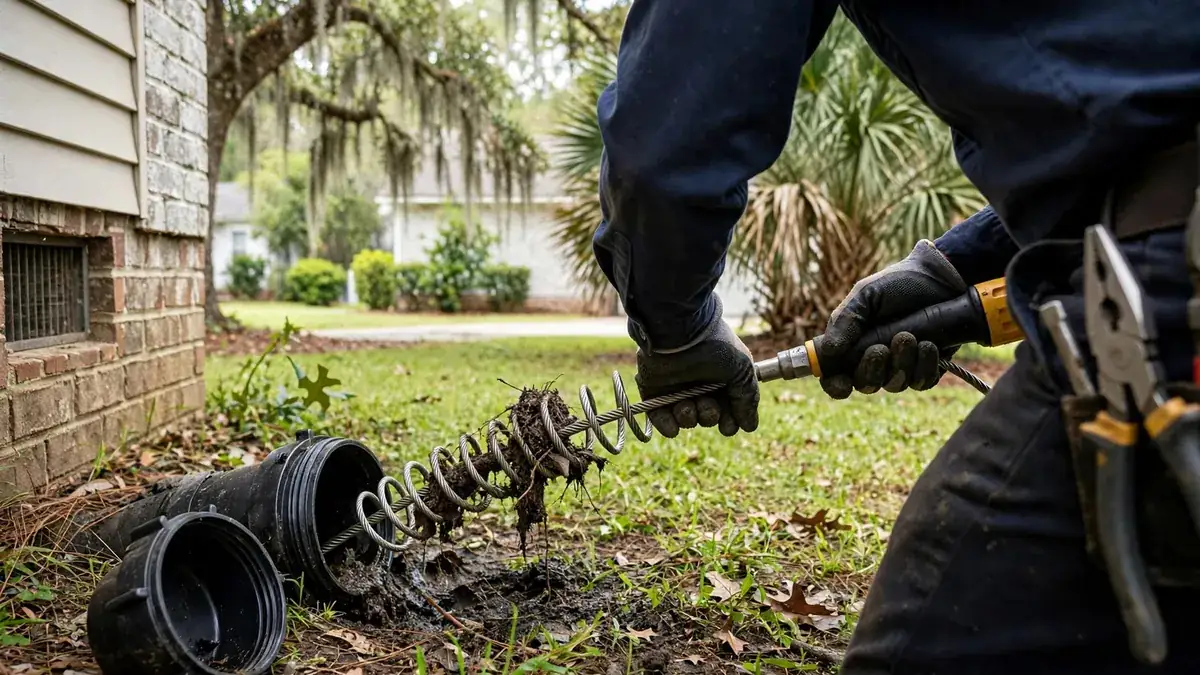
- 2Find the pattern. If only one fixture is slow the clog is local, and if several back up together the main line is the likely culprit.
- 3Check the cleanout. A capped pipe in the yard or garage is the access point we use, so clear the area around it.
- 4Call. Tell the person who answers which fixtures are affected so the right cable comes along.
Is it one fixture or the whole house line?
A single slow sink almost always means a hair, grease or soap clog within a few feet of the trap. A kitchen sink, a bathroom sink and a tub that all slow down at once usually share one branch, and a toilet that burbles when you drain the tub points to the main building drain.
That distinction decides the tool. A small hand auger or drum machine clears a fixture clog quickly, while a main line needs a longer cable with the right cutting head or, for heavy buildup, hydro jetting.
Drain snaking, cabling and when jetting is the better call
Snaking with a hand auger handles trap and branch clogs. Cabling uses a motorized drum with a cutting head to chew through roots and compacted scale deeper in the line, and it is the standard answer to a main drain that backs up.
A cable punches a hole through a blockage but can leave a coating of grease or scale on the pipe wall. If the same drain clogs again within months, we recommend a camera look through sewer camera inspection before anything is cut or dug, so the repair matches what is actually in the pipe.
Kitchen sink clogs: grease, disposals and food waste
Kitchen drains clog differently from bathroom drains. Cooking fat cools inside the pipe and traps coffee grounds, rice and fibrous scraps, and a garbage disposal grinds food into pieces that settle at the first low spot.
If your disposal hums but the sink will not empty, the clog may be past the disposal in the trap arm. A failed unit is a separate job, handled under garbage disposal repair.
Older drains near downtown and mature oak roots
Streets around Historic Downtown and First Street are lined with large trees, and homes from the early twentieth century often still have original drain materials underground. Roots look for the moisture and nutrients that leak from a joint, then thicken into a mat that catches paper and grease.
A root clog is a symptom, not just a blockage. If a cable keeps returning with root fibers, the line has an open joint that eventually needs a repair under sewer line repair, and clearing it again only buys time.
Where the clog usually sits
| Where | What you notice | Usual fix |
|---|---|---|
| Fixture trap | One sink or tub drains slowly | Hand auger or trap clean-out |
| Branch line | Two or three fixtures slow together | Drum machine cable |
| Main building drain | Toilets gurgle and floor drains back up | Cable from the cleanout, camera if it repeats |
| Grease buildup | Kitchen line clogs every few months | Hydro jetting or scheduled cleaning |
| Roots at a joint | Clog returns with fibers on the cable | Cut roots, then camera and repair |
What drain cleaning costs depend on
Ask for a price before work starts. These are the factors that move it.
Ask whether your homeowner policy covers backup damage, because many policies exclude it unless an endorsement was added. Want your real number? Call (407) 964-8940.
Drain Cleaning questions in Sanford, FL
Call and ask about availability. Describe which drains are backing up and ask about the next available plumber for your address. Ask about timing when you call.
A cable opens a channel but does not always remove the coating on the pipe wall. Repeat clogs usually mean grease or scale on the pipe, roots at a joint, or a belly in the line where waste settles. A camera look shows which one it is.
We recommend against it. Chemical cleaner sits in a blocked pipe, can harm older metal fittings, and is a hazard to the person who opens the trap afterward. A plunger on a single fixture is a safer first step.
When toilets, tubs and floor drains all back up together, or when running the washer makes a floor drain gurgle, the main building drain is the likely cause. Stop using water and call so the cleanout can be cabled.
Coverage for water backup varies by policy and is often an add-on. Check your declarations page or ask your agent. We can describe the cause in plain terms for a claim, and we do not file insurance claims for you.