
Disposal leak or jam emergency: safe first steps
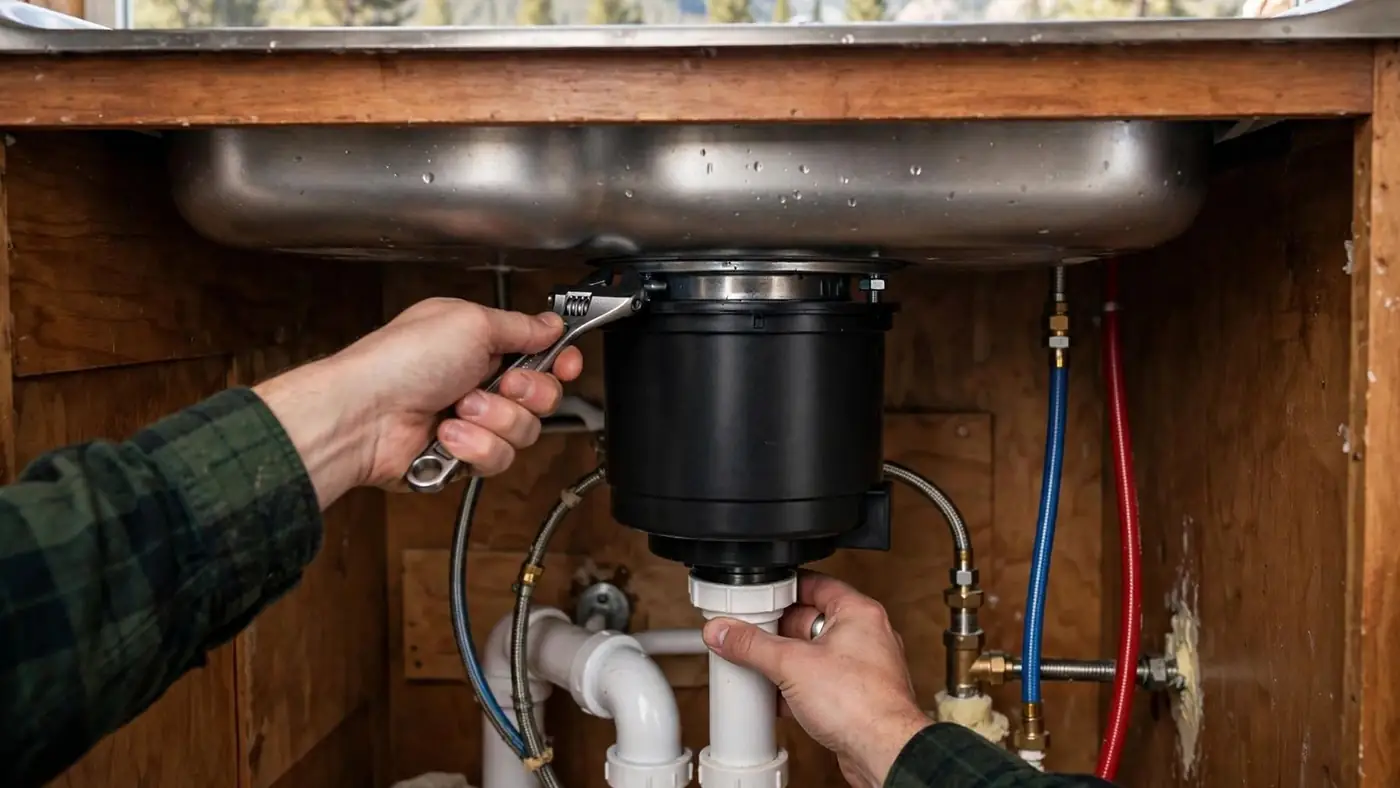
A disposal sits over a drain and a cabinet full of supplies. A leak or a jam that stops the sink needs quick action, and none of it should involve reaching into the unit.
- 1Turn it off. Use the wall switch and the breaker.
- 2Never put a hand inside. Use tongs if you must retrieve an object.
- 3Stop running water. A full sink with a leaking unit floods the cabinet.
- 4Call and ask about help. Tell us if it hums, leaks or is silent.
Humming, jammed, leaking and slow-draining units
A hum with no spin means the blades are jammed, and many units have a hex socket at the bottom for turning the motor by hand once the power is off. A silent unit may have tripped its reset button or lost power. A leak can come from the sink flange, the discharge connection or the housing seam.
A leak from the housing means the unit has failed and should be replaced. A sink that will not drain with a working disposal usually has a clog in the trap arm, which is a job for drain cleaning.
Replacing and installing a disposal
A new disposal is sized by motor horsepower and how much waste you send through it. Installation includes the mounting ring, the discharge pipe, the dishwasher connection and a power check. A switch, an outlet or a hard-wired connection is set up to match the new unit.
Some homes have no disposal at all. We install one where the sink has a drain and power nearby, and we explain the plumbing changes before work begins.
What not to put down the disposal
Grease, coffee grounds, fibrous vegetables, eggshells in bulk and starchy foods are the usual causes of clogs, even though they fit in the unit. Bones, fruit pits and utensils jam it outright.
Cold water while it runs and a short run after you stop help move waste past the trap. If you cook with a lot of grease, collect it in a can instead.
Troubleshooting
| Symptom | Likely cause | Next step |
|---|---|---|
| Hums, does not spin | Jammed blades | Free the jam with the hex tool, then reset |
| Silent | Tripped reset or no power | Press reset, check the breaker |
| Leak at the top | Sink flange seal | Reseal the flange |
| Leak from the body | Cracked housing | Replace the unit |
| Sink will not drain | Clog after the unit | Clear the trap arm |
Kitchen plumbing in Sanford homes
Kitchens in older Sanford houses often have original drain pipe and traps in the cabinet, and tight spaces make disposal work slower. Newer homes along SR 46 and US 17-92 are easier to access but may carry builder-grade units that have not lasted.
If your kitchen sink backs up often, the disposal may be hiding a grease problem in the line. A hydro jetting visit may be better than replacing the unit.
What disposal work costs depend on
Clear pricing before work starts.
Insurance may cover water damage from a leaking unit but not the disposal. Want your real number? Call (407) 964-8940.
Disposal safety steps while you wait
Switch the disposal off at the wall switch and unplug it or turn off its breaker before you look inside. Never put your hand into the chamber, even when the unit is off.
Do not pour drain cleaner into a jammed disposal. The chemicals splash back at whoever works on it, and they sit in the trap until a plumber clears them.
Follow the manufacturer guidelines for the hex-key reset at the bottom, and if the unit hums and will not turn, stop and call.
Garbage Disposal Repair & Installation questions in Sanford, FL
Call and ask about availability. If the unit leaks, turn off the power and the sink water and call us.
The blades are jammed. With the power off, a hex wrench in the bottom socket can free it. If the jam returns, the unit may be failing.
Ask about timing when you call. Tell us the size you want when you call.
A leak at the sink flange or a connection can be fixed. A leak from the housing means the unit has failed and should be replaced.
Usually yes. We check for a drain connection, power and cabinet space before quoting.