
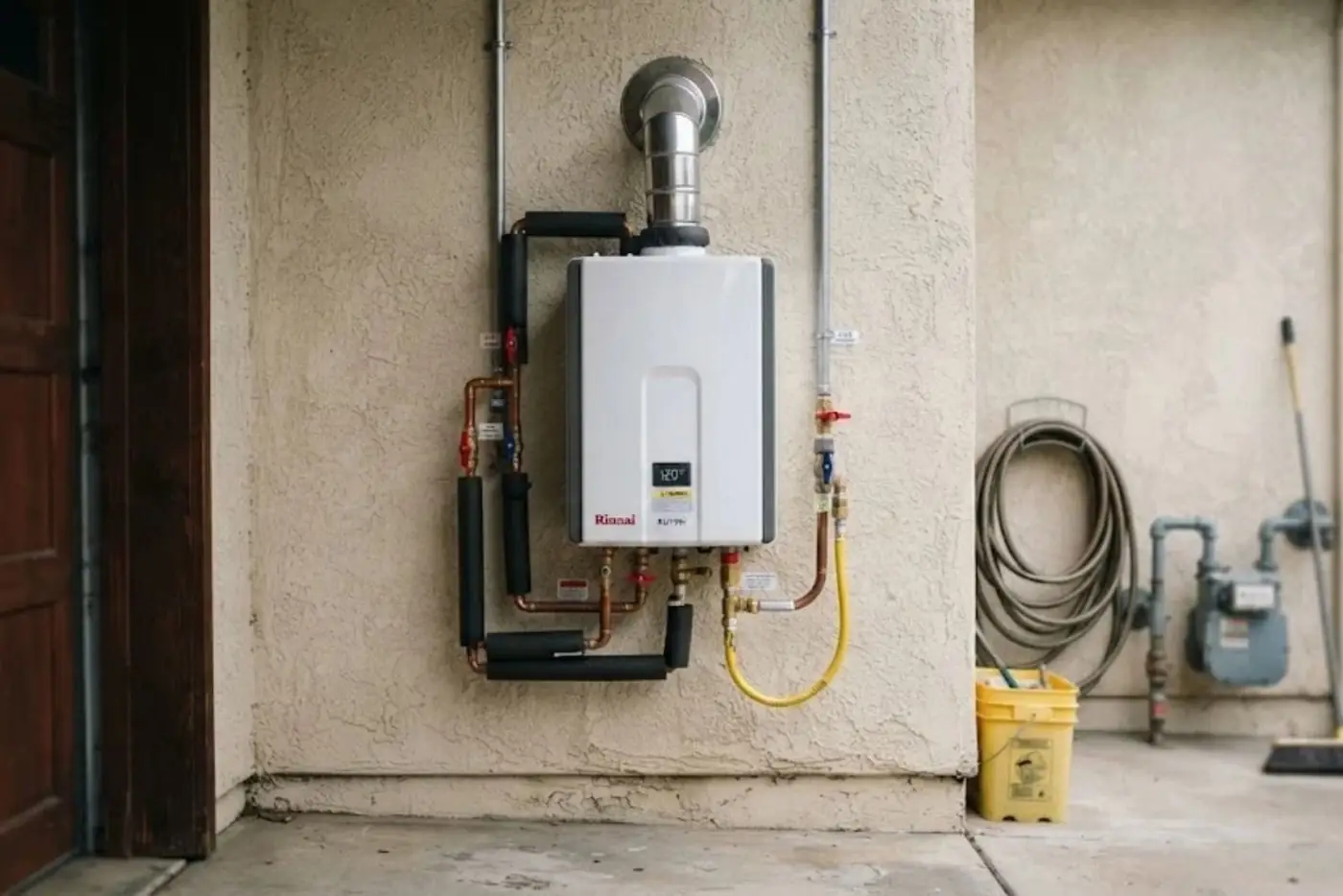
What a tankless water heater does differently
When you open a hot tap, flow sensors tell the burner or elements to fire, and water is heated as it passes through a heat exchanger. Nothing sits in a tank, so there is no standing water to rust and no standby heat loss.
The catch is capacity. A unit can only raise water temperature by so much at a given flow rate, so showers, a dishwasher and a washer running together can exceed what it can deliver. Sizing it to the household is the first job.
Warm Florida inlet water helps, and flushing still matters
Water entering a Florida home is warmer than in cold northern states, which usually means the heater has less temperature rise to make. That can mean a smaller unit does the job, but we still size by flow and gas supply, not by guesswork.
Minerals in the water coat the heat exchanger over time. Sanford's annual water quality report lists chlorine, fluoride and lead results and does not state a hardness figure, so test your tap or ask the utility, and plan on flushing the unit on a regular schedule.
Flushing and descaling a tankless unit
A flush circulates a mild descaling solution through the heat exchanger so scale does not choke flow or trigger error codes. It also lets us clean the inlet filter and check the venting.
If your unit shows a flow, temperature or ignition error, scale is a frequent cause. A flush is cheaper than a replacement heat exchanger, and we can pair it with a check of the gas supply during the same visit.
What a tankless installation involves
Many tankless conversions need a bigger gas line, a dedicated vent and new water connections with isolation valves for flushing. Electric units need heavy circuits that some panels cannot supply.
If you are swapping a failed tank, compare costs with a standard water heater replacement before committing, since the added gas, vent and electrical work can change the total. Planned work in a new location is part of water heater installation.
Tank or tankless
| Feature | Tankless | Storage tank |
|---|---|---|
| Hot water supply | Continuous, flow-limited | Limited by tank size |
| Space needed | Small wall footprint | Floor space |
| Upfront cost | Higher | Lower |
| Maintenance | Regular flush | Occasional drain and anode check |
| Venting and fuel | Often upgraded | Often unchanged |
Tankless problems we see most
The most common complaints are a unit that shows an error code, water that turns cold in the middle of a shower, a unit that will not ignite and reduced flow at the taps. Each points to a different cause, such as a scaled heat exchanger, a blocked inlet filter, a gas supply restriction or a failed sensor.
Cold water sandwiches, where hot water is followed by a cold slug, usually come from a short run time between uses or from a flow too low to trigger the burner. We test flow and temperature at the unit and at the fixture before we recommend a repair or a different setup.
What tankless work costs depend on
Price follows the supply upgrades more than the unit.
Standard homeowners insurance rarely covers planned upgrades. Want a firm number? Call (407) 964-8940.
Tankless Water Heater questions in Sanford, FL
Yes. A flush clears scale from the heat exchanger and cleans the inlet filter. It is the most common tankless service call.
Common causes are scale, a restricted gas or water supply, venting trouble or a failed sensor. Tell us the brand and the code and we can usually narrow the cause.
Often it needs a larger line or a dedicated run. We measure the load and the line during the quote.
Many are rated for a longer life when flushed regularly, but results depend on water quality and care. We explain the factors for your home.
Yes. We check the power supply, elements and sensors as well as the water side.