
Hidden leak emergency: confirm it and stop the water
A leak you cannot see can still damage floors, drywall and cabinets within days, and a service line leak can run your bill up quickly. A quick test tells you whether the loss is inside or outside the house.
- 1Find the main shutoff. It is a valve near the meter or where the supply enters the home.
- 2Read the meter. With every fixture off, a moving dial or flickering triangle means water is escaping.
- 3Shut the main. If the dial stops, the leak is inside, and if it keeps moving the leak is before the house.
- 4Call and ask about help. Tell us what you saw, because the answer changes where we start.
Signs of a hidden leak
Callers usually describe one of a few things. A water meter that keeps running with nothing on, a bill that jumped without a change in habits, a warm patch on a floor, a musty smell, a damp wall or ceiling stain, or sound of running water at night.
Low pressure in one part of the house can also point to a leak on that branch. Hot spots on a tile floor often mean a hot line leaking under the slab, which overlaps with slab leak repair.
Detection methods, in plain terms
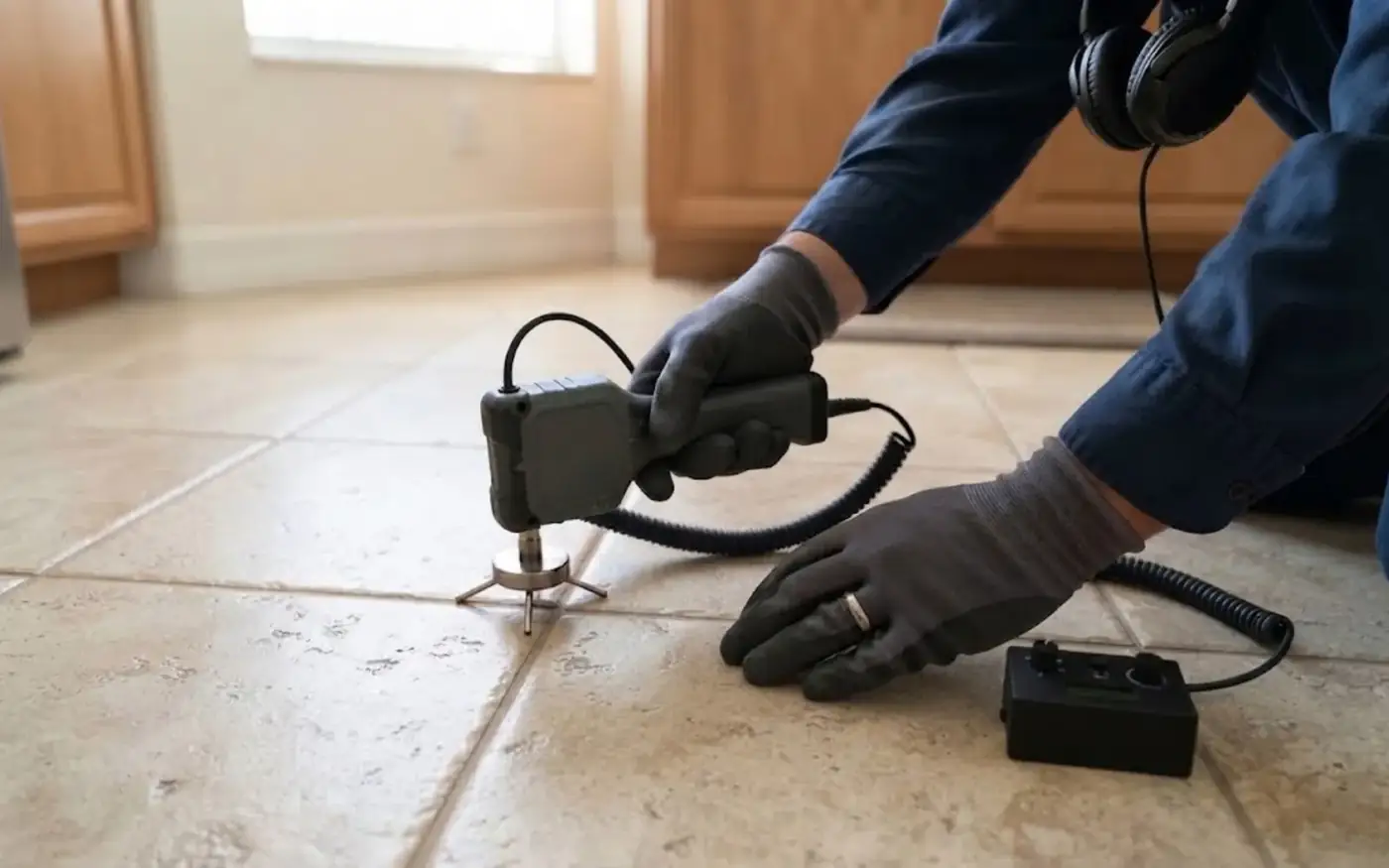
We start with a pressure test to isolate whether the leak is on the hot side, the cold side or outside before the meter. Then we narrow it with acoustic listening devices that pick up the sound of water escaping through a pipe, and with thermal imaging that shows a temperature difference on a floor or wall.
Where the signal is strong we mark the spot before any cutting, so the opening is small. If a drain line is suspected, a sewer camera confirms it from the inside.
High water bill or meter still running
A meter that moves with everything off is the cleanest evidence of a leak. Toilets that run silently, irrigation valves stuck open and a failed water heater relief valve are frequent causes, and underground service line leaks often show only as a steady dial.
If the loss is between the meter and the house, the repair is covered under water service line repair. Ask your water utility how it handles adjustments for leaks, since policies vary.
Walls, ceilings, crawlspaces, yards and irrigation
Ceiling and wall leaks often come from a supply line or drain above, and the stain can sit several feet from the source. Raised homes and some older houses have a crawlspace where a slow leak rots framing, and in yards a buried line or a broken irrigation pipe shows as a soggy patch or unusually green strip of lawn.
Pools and spas have their own leak signs. We can check the supply and return plumbing around them, and the pool shell itself is a job for a pool specialist.
What the clue means
| Clue | Likely source | First test |
|---|---|---|
| Meter moves with all fixtures off | Line between meter and house, or inside | Shut main, recheck the dial |
| Warm spot on a floor | Hot line under the slab | Thermal scan and acoustic test |
| Ceiling stain | Supply or drain above | Moisture meter and pressure test |
| Soggy yard strip | Buried line or irrigation | Isolate the zone or service line |
| Low pressure in one area | Branch line leak | Pressure test by branch |
What leak detection costs depend on
The price depends on how much searching the job takes.
Insurance often covers the resulting water damage from a sudden leak but not the cost of the repair itself or slow, ongoing seepage, so confirm with your agent. Ready for a firm number? Call (407) 964-8940.
Meter checks and published guidelines
The simplest first test is a water meter check. According to the guidelines most utilities publish, turn off every fixture, read the meter, wait fifteen minutes and read it again, because movement means water is leaking somewhere.
Ask the City of Sanford utility about its own leak adjustment policy before you pay a large bill, since policies differ from utility to utility.
Leak Detection questions in Sanford, FL
Call and ask about availability. If you can see or hear active water, shut off the main valve, avoid wet electrical areas and call right away.
Turn every fixture and appliance off, then watch the dial or flow indicator at the meter. If it keeps moving, water is escaping somewhere.
In most cases we locate it with sound and thermal tools and open only a small area. The goal is to know where to cut before we cut.
No. Seasonal irrigation, guests or a filling pool can raise a bill. A meter test with everything off separates real leaks from usage.
Yes. Once the source is confirmed, ask for the repair options and a price before any work starts.