
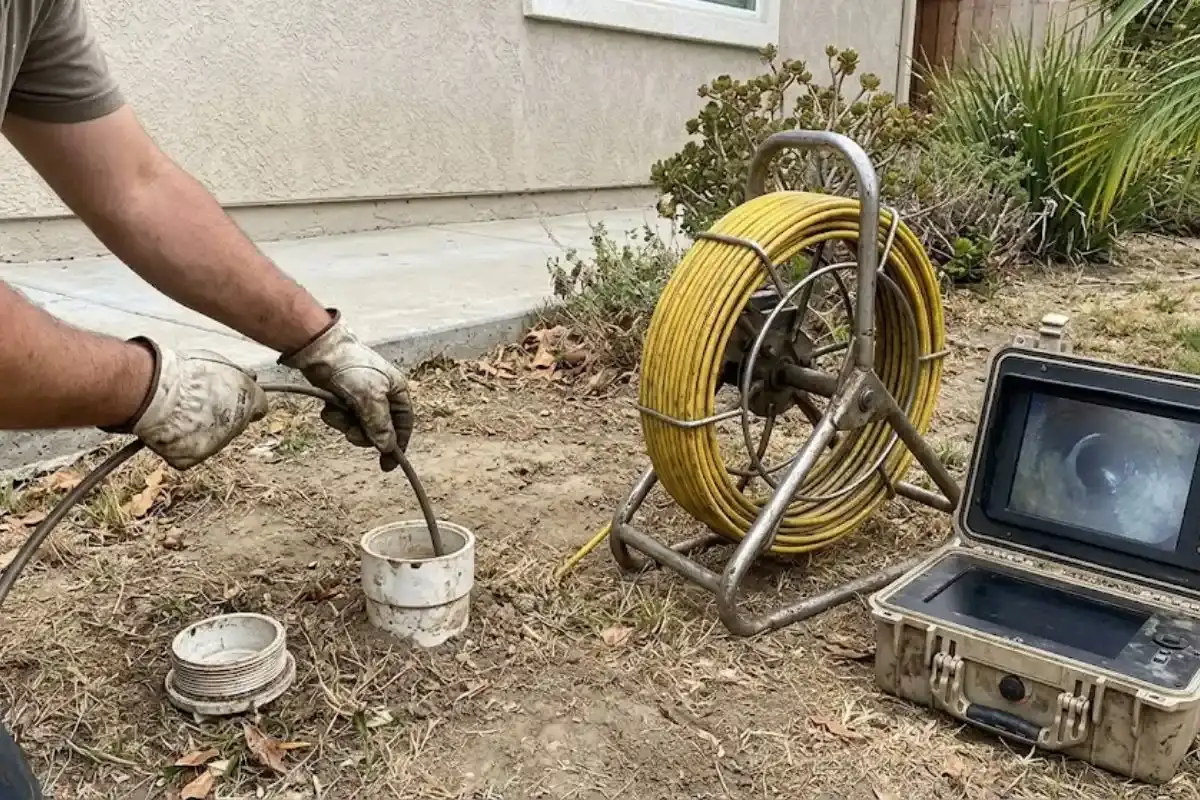
A camera on a flexible cable, pushed through your line
A sewer inspection feeds a waterproof camera head through the cleanout and along the drain line while a monitor shows the live view. A locator in the head lets us trace the pipe above ground so we know exactly where a problem sits and how deep it is.
You see the same picture we do. We note offsets, cracks, low spots where water pools, root intrusions, scale and any collapse, and we explain what each one means.
Good reasons to inspect a sewer line
The most common reasons are repeated backups, slow drains that cabling does not cure, a home purchase where the sewer line was not examined, a house with trees close to the pipe and an older line you want to understand before a renovation. It is also the smart first step before any dig.
If an emergency backup is the reason, our sewer line repair page covers what happens next. For a line that just needs clearing, a sewer line cleaning visit may be enough.
Home buyers: why inspect the line before closing
A general home inspection does not include the underground drain line. Older houses near Historic Downtown and Goldsboro are likelier to have original pipe, and any buyer of a house with mature trees should know what the line looks like.
A recorded inspection gives you leverage in a negotiation and a baseline to compare against later. Ask for the video file at the end of the visit.
What the camera can find
| Finding | What it means | Usual next step |
|---|---|---|
| Roots at a joint | An open joint lets roots in | Cut roots, then repair or lining |
| Offset joint | Pipe sections have shifted | Spot repair or lining depending on severity |
| Belly or sag | Waste collects in a low spot | Monitor, jet or replace that section |
| Cracked pipe | Structural failure in the wall | Spot repair or trenchless lining |
| Scale or grease | Buildup narrowing the bore | Hydro jetting |
Inspections around Sanford and Lake Mary
Sandy soil in this part of Central Florida can shift under a pipe after heavy rain, which is one way a line ends up with a sag. In neighborhoods with large oaks, roots are a common finding, and in newer builds we more often see construction debris left in the line.
If your line connects to a septic system rather than a city sewer, tell us when you book so the inspection scope fits.
What an inspection costs depends on
A planned inspection is priced up front.
Insurance does not cover a planned inspection, and a real-estate transaction may allow you to ask the seller about repairs. Want a firm number? Call (407) 964-8940.
Reading a camera report
A good inspection report shows the footage, names the pipe material and notes the distance from the cleanout to each defect. Ask for a copy of the video so a second plumber can review it.
Pipe grades and sizing in Florida follow the Florida Building Code, Plumbing, so a line that holds water or sags may be below the standard the code expects.
Sewer Inspection questions in Sanford, FL
Many inspections take around an hour on a straightforward line, longer for a long, blocked or complicated run.
Yes, ask for the recording and a short summary of the findings at the end of the visit.
Usually the line is cleared first so the camera can pass. We explain that step when you book.
No. A sewer camera looks at the drain line. Supply leaks are found with pressure tests and acoustic tools through leak detection.
It is worth doing if you see slow drains or the house has mature trees nearby. Construction debris and settling can show up in newer lines too.