
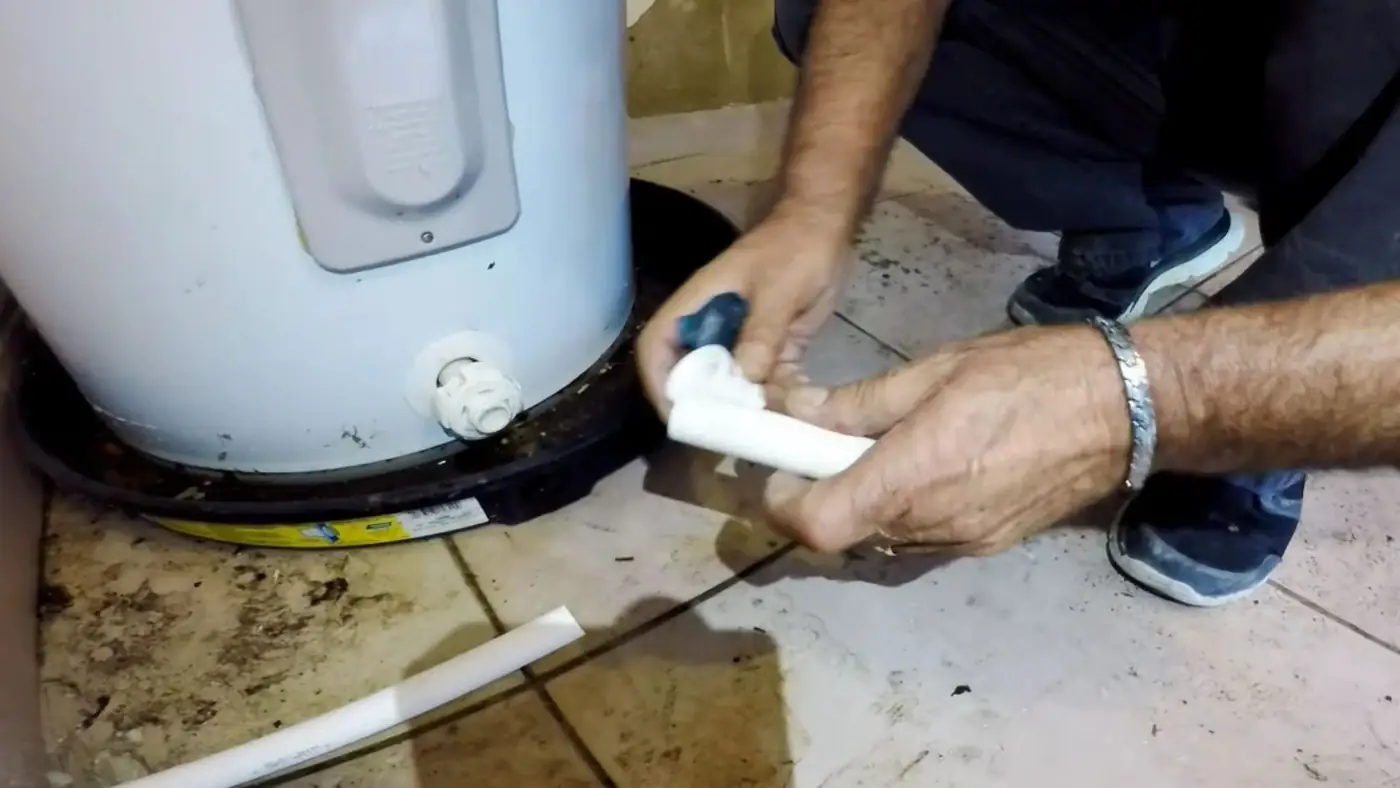
Leaking water heater emergency: shut it down safely
Water pooling around a tank can come from a loose fitting, a failed relief valve or a tank that has rusted through. The first two are repairs, and the third usually means replacement, but all three start with the same shutdown.
- 1Turn off the fuel. Set a gas unit to pilot or off, or flip the dedicated breaker for an electric one.
- 2Close the cold supply. The valve on the pipe feeding the top of the tank stops new water entering.
- 3Contain the water. Move stored items, and do not step into water that reaches an outlet or power strip.
- 4Call. Describe where the water is coming from, since fittings, relief valves and tank bodies need different parts.
No hot water, lukewarm water and strange noises
On an electric heater, no hot water at all often points to a tripped breaker, a failed upper element or a bad thermostat, while lukewarm water that runs out fast usually means the lower element has failed. On a gas heater, a pilot that will not stay lit often traces to a worn thermocouple or a dirty burner.
Popping and rumbling come from sediment on the tank bottom. A sulfur smell can point to a reaction at the anode rod. Each has a different fix, which is why we ask a few questions before the truck rolls.
Common water heater repairs
Most repair calls are small parts: heating elements, thermostats, thermocouples, gas control valves, anode rods, drain valves and temperature and pressure relief valves. A relief valve that drips is doing its job or has failed, and either way it should not be capped or plugged.
If the tank itself is leaking, repair is not possible, because the steel liner has failed. In that case we explain the options under water heater replacement and ask for a price before any work starts.
Gas, electric and hybrid units need different checks
Gas heaters need a clean burn, a working draft and a secure vent, and any smell of gas means leaving the house and calling the gas utility before calling us. Electric heaters are about elements, thermostats and power, and a licensed plumber should confirm the circuit before opening any panel.
Heat pump or hybrid units add a compressor, filters and a condensate drain, so a unit that blows cool air or drips from the base has more to inspect. For homes considering a switch to on-demand hot water, tankless water heater service covers install, repair and flushing.
Water heaters in Sanford garages, closets and attics
Many Central Florida homes sit on concrete slabs, so tanks often live in the garage, a utility closet or the attic. Attic units can leak through a ceiling before anyone notices, and garage units face dust, humidity and sometimes flooding during heavy summer storms.
Sanford's drinking water comes from groundwater wells that draw from the Floridan Aquifer, according to the City of Sanford's annual water quality report. The report does not give a hardness figure, so test your tap or ask the utility, because mineral buildup shortens heater life and makes sediment noises more likely.
Repair or replace?
The age and the failure type decide the right call.
| Symptom | Likely cause | Usual outcome |
|---|---|---|
| No hot water, electric | Element, thermostat or breaker | Repair |
| Pilot will not stay lit, gas | Thermocouple or burner | Repair |
| Dripping from the relief valve | Valve or pressure issue | Repair, then check expansion tank |
| Water at the tank base | Fitting or failed tank | Repair if fitting, replace if tank |
| Rusty hot water, old tank | Corroded tank | Replace |
What water heater repair costs depend on
Repair pricing follows the part and the access.
Many tank leaks are not covered by homeowners insurance unless the leak damages the structure, so ask your agent. Ready for a firm number? Call (407) 964-8940.
Water Heater Repair questions in Sanford, FL
Call and ask about availability. If water is leaking, shut off the fuel and the cold supply first, then call. Ask about timing when you call.
On an electric unit, a tripped breaker or failed element is common. On a gas unit, check whether the pilot is lit before calling, and if it will not stay lit the thermocouple may need replacing.
No. Turn off the fuel and the cold water supply and have it checked. A small drip can come from a fitting, but a leak from the tank body means the heater is failing and may flood the area.
Many tank heaters last roughly a decade, though water quality, sediment and maintenance change that. If yours is much older and has started leaking or making noise, replacement usually costs less than repeated repairs.
Yes, we service tankless units, including descaling and flushing. Error codes vary by brand, so tell us the model on the label when you call.