
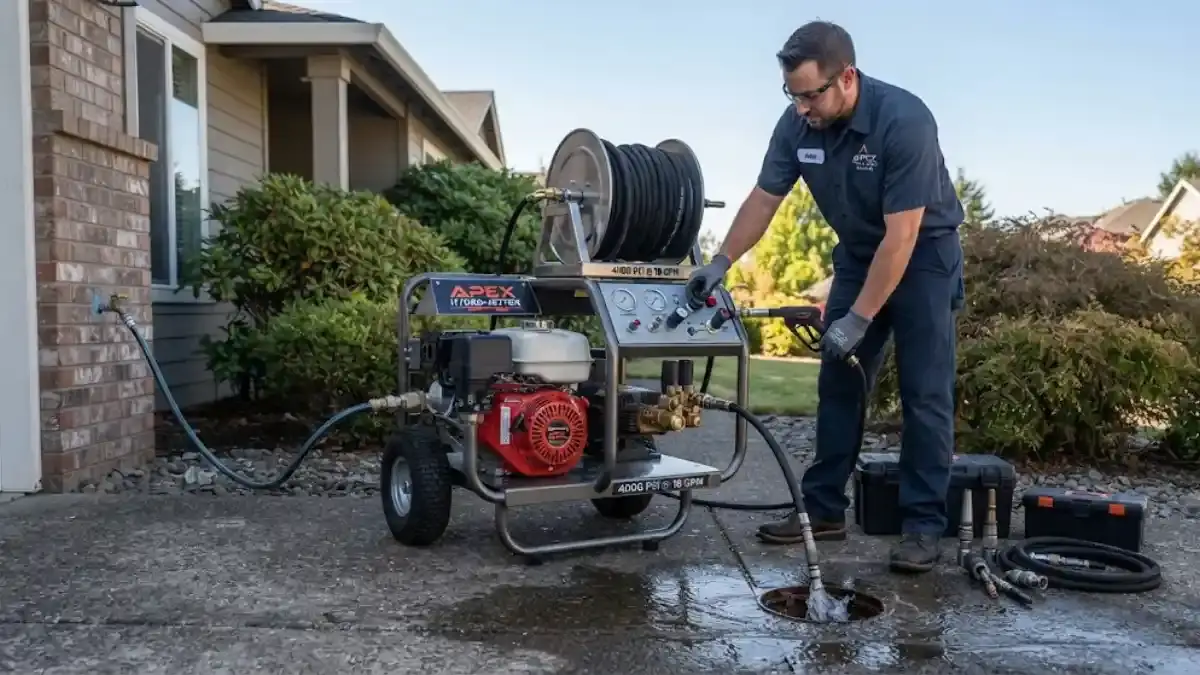
What hydro jetting actually does
A jetting machine pumps water at high pressure through a hose with a nozzle that fires jets forward and backward. The backward jets pull the hose along the pipe while the water strips grease, scale and soft debris from the walls instead of punching a single hole through it.
That is the difference from a cable. A cable clears a path, and jetting cleans the pipe. Where the line is sound, the result is a pipe that flows like it was lately installed.
Sewer or drain backup emergency: your first five minutes
A line that backs up into a tub or floor drain needs action before it reaches carpet or wood floors.
- 1Stop water use. No flushing, laundry or dishwasher until the line is clear.
- 2Locate the cleanout. It is a capped pipe near the house or the street side of the yard.
- 3Keep kids and pets back. Backed-up wastewater carries bacteria and should be handled with gloves.
- 4Call and say what drains are affected. The plumber decides whether jetting or cabling is the right first pass.
When jetting beats cabling
Jetting earns its price on grease-heavy lines such as restaurant kitchens and older home kitchen branches, on lines coated with mineral scale, and on mains that clog again within months of cabling. It also prepares a line for a clean camera inspection, since a pipe full of debris hides defects.
Jetting is not the right tool for every line. A cracked, collapsed or heavily root-invaded older pipe can be damaged by high pressure, so we look first with a sewer camera when the line's condition is unknown.
Roots, scale and grease: what jetting can and cannot do
Rotating nozzles and root-cutting heads handle fibrous roots, and a jetting pass afterward washes the cuttings away. Mineral scale breaks up under pressure, and grease liquefies as the hot water and pressure act on it.
What jetting cannot do is repair a broken pipe. If roots return fast, the joint they entered is open, and the lasting fix is sewer line repair rather than another cleaning.
Matching the problem to the tool
| Problem | Best first tool | Why |
|---|---|---|
| One fixture clog | Hand auger | Fast and low cost |
| Main line backs up once | Cable | Opens a path in a sound line |
| Main line backs up repeatedly | Hydro jetting | Cleans the pipe wall |
| Grease in a commercial kitchen line | Hydro jetting | Strips fats cables leave behind |
| Unknown pipe condition | Camera first | Avoids pressure on a damaged pipe |
Jetting in Sanford homes and businesses
Restaurants and breweries around First Street run grease through older storefront lines, and a scheduled jetting pass between busy seasons often costs less than a weekend backup. Homes near Lake Monroe and mature oaks face roots, while newer subdivisions off SR 417 and I-4 more often see construction debris and grease.
If your business needs recurring service, see commercial plumbing for scheduled maintenance, and for a full line-clearing job on homes, sewer line cleaning covers the main building drain.
What jetting costs depend on
We quote the job clearly before work starts. These factors shape the price.
Insurance usually covers sudden water damage but not routine line cleaning, so check your policy. Want your real number? Call (407) 964-8940.
Preparing for a hydro jetting visit
Keep people and pets away from the cleanout area, and clear the path to the access point. Do not run water or flush while the line is being jetted.
Tell the plumber about any known cracks, a past repair or a line you suspect is cast iron or clay. High water pressure is a poor choice for a damaged pipe, and the guidelines from equipment makers call for a camera look first when the condition is unknown.
Where jetting fits within code
Jetting is a cleaning method, not a repair, so it does not change what the Florida Building Code, Plumbing requires of the line. If the camera shows a failed section, that section needs repair, and your building department sets any permit rules.
Hydro Jetting questions in Sanford, FL
Call and ask about availability for an urgent backup. Tell us which drains are backing up and whether the cleanout is accessible.
It is safe for sound pipes and risky for cracked or collapsed ones. When pipe condition is unknown, we run a camera first and recommend the method that matches what we see.
That depends on the kitchen, but grease-heavy lines are often cleaned on a recurring schedule between backups. We can suggest an interval after seeing the first pass.
A root-cutting nozzle clears roots from the pipe. If the same roots return, the joint where they entered needs repair.
Water and debris are flushed downstream into the sewer. We use drop cloths and cap the work area at the cleanout.