
When patching stops working
Repeated leaks in different parts of the house, low pressure throughout, brown or rusty water and visible corrosion on exposed pipe all point to a system that is wearing out. Galvanized steel corrodes from the inside and narrows the bore, and older copper can develop pinhole leaks.
A single leak is a repair. A pattern of leaks is a signal. If one pipe has failed, the one next to it is often from the same batch of material and the same age.
PEX, copper and what we use
PEX is a flexible plastic pipe that bends around corners, needs fewer joints and does not corrode, and it is the usual choice for repipes. Copper is rigid and long-lived, costs more and takes more labor. Each has trade-offs in cost, access and sound.
We explain both and recommend one for your house. Pipe choice also depends on the local code and the permit requirements of your jurisdiction.
What a repipe involves
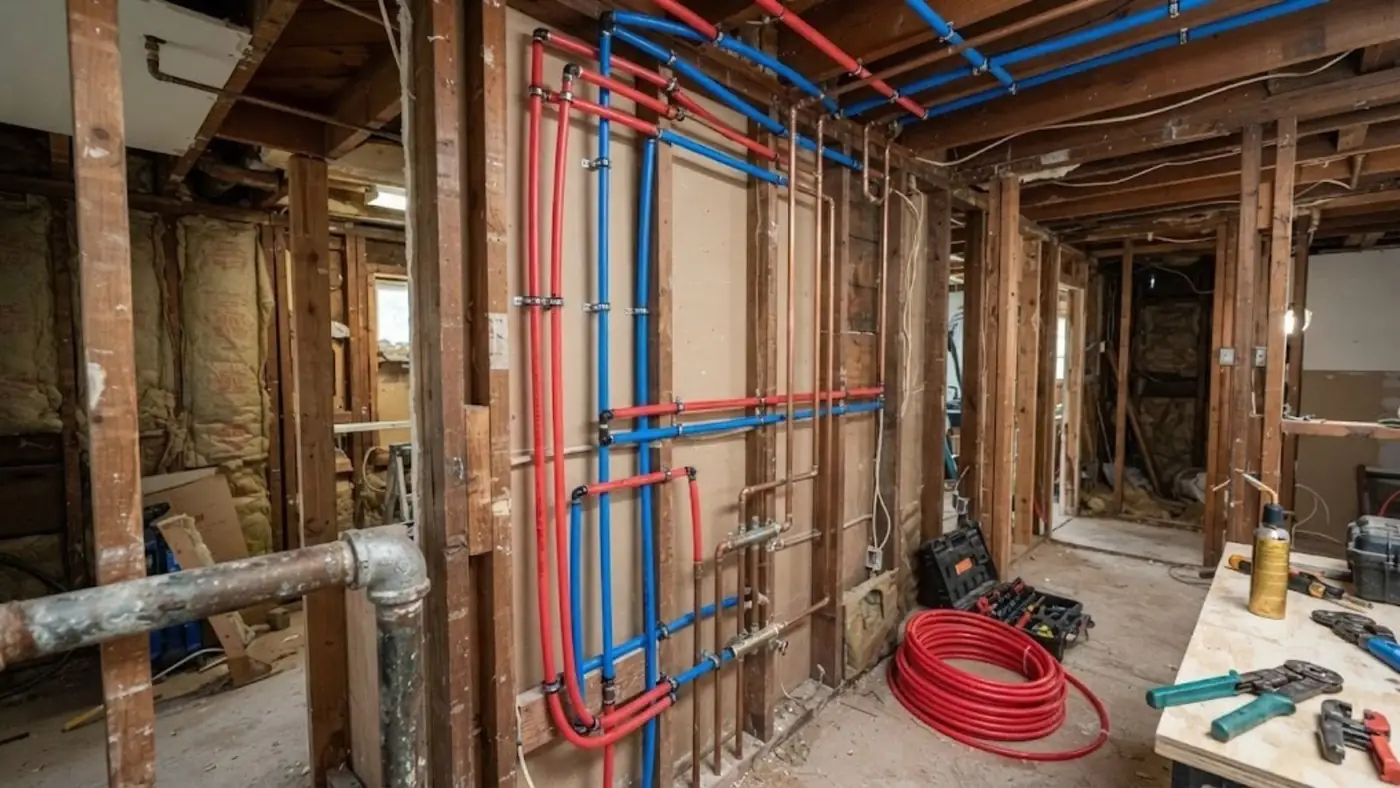
A repipe starts with a walkthrough of the home to count fixtures and plan routes. Lines run through attics, crawlspaces or walls, and drywall access is planned in advance to keep patching small. The old lines are disconnected and capped, and new lines are pressure tested before the walls are closed.
Most repipes take a few days depending on the house. Water is off for part of that time, and we plan the schedule so you know when it is back.
Material comparison
| Material | Pros | Trade-offs |
|---|---|---|
| PEX | Flexible, fewer fittings, resists corrosion | Not for outdoor sun exposure |
| Copper | Long-lived, heat tolerant | Higher material and labor cost |
| CPVC | Rigid plastic, lower cost | Can become brittle over time |
| Galvanized steel (existing) | Common in older homes | Corrodes and restricts flow |
Repiping in Sanford and the surrounding area
Homes near Historic Downtown include early twentieth century houses that have had piping updated unevenly over the years, so galvanized lines may survive in some walls and copper in others. Slab homes route lines under the floor, and a leak there often means a bigger repair under slab leak repair, which sometimes leads homeowners to reroute through the attic instead.
Neighborhoods built in more recent decades often have copper or CPVC from their era. Ask for a pipe check if you have recurring leaks and are not sure what is in your walls.
Planning the routes, the shutdowns and the patching
Before any pipe is cut we walk the house with you and agree where the new lines will run. Attic routes keep most of the work out of finished walls, and where a branch must pass through a wall we choose the spot with the least finish to repair. A plan on paper avoids surprises later.
Water is shut off during parts of the work, and we schedule the longest outages for the day when you can be away. We also set up a temporary water source for the day when possible. After the new lines are tested, the old ones are capped or removed, and the house is flushed so debris leaves the system.
What repiping costs depend on
A repipe is priced by the house, not a flat number.
Insurance does not usually pay for repiping due to age, but it may cover resulting water damage. Want a firm number? Call (407) 964-8940.
How to prepare your home for a repipe
Clear the areas around the water heater, the main shutoff and the under-sink cabinets. Move furniture and fragile items out of rooms where walls may be opened.
Plan for the water to be off for part of the day, store drinking water and tell everyone in the house. Ask in advance about patching and painting, because most crews leave finished repairs to a separate trade.
Permits and pipe standards for repiping
A repipe is a large change to the system, so it is normally permitted and inspected under the Florida Building Code, Plumbing. Ask the building department that covers your address what applies, and expect the work to be checked against the code the city enforces.
Repiping questions in Sanford, FL
Most take a few days, depending on the size and the access. We confirm the schedule before work starts.
PEX is widely approved for potable water in the United States and is used in many new homes. We use fittings and methods approved for your jurisdiction.
Usually not, though water will be off for part of each day. Plan for limited bathroom use during the work.
Galvanized pipe is gray and magnetic. A magnet will stick to it, and copper will not.
We keep access holes small and explain the patching plan up front. Finish painting and texture are usually separate.