
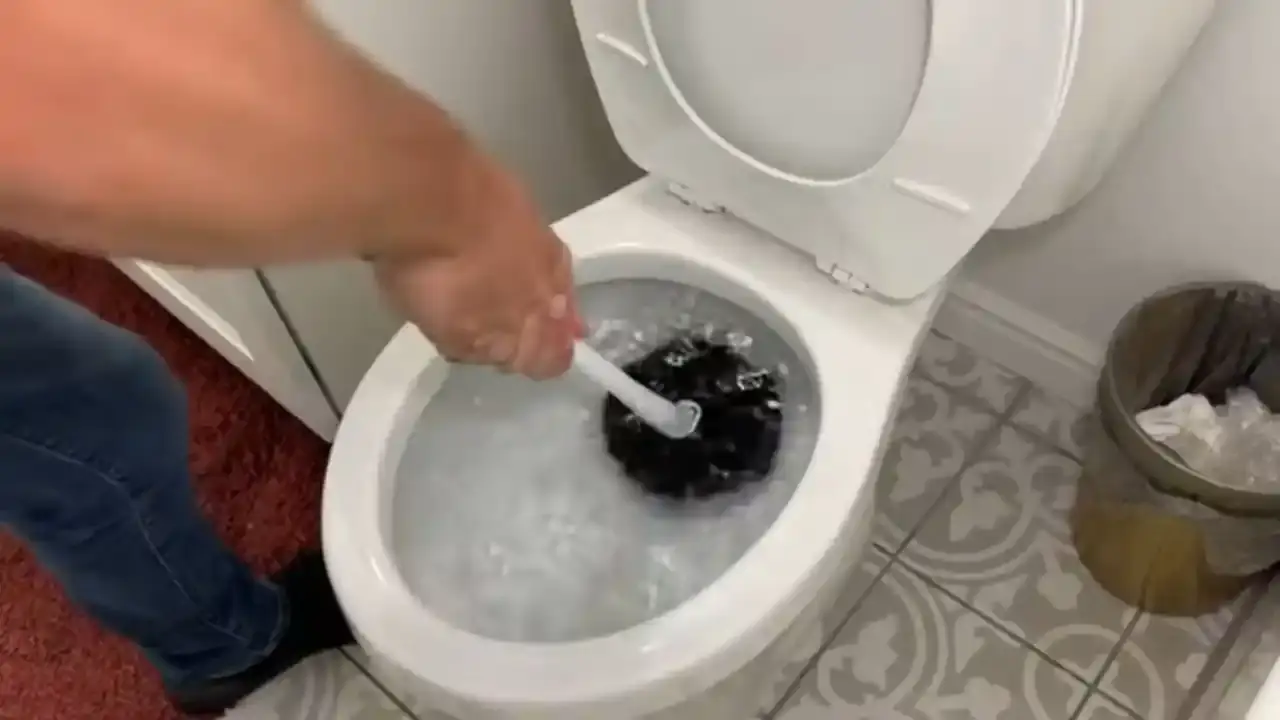
Too much paper or waste at once
Toilets are built to handle human waste and toilet paper. A large wad of paper or a very heavy load overwhelms the trap and slows the flush.
Flushing twice for large loads, or breaking up paper, prevents most of these clogs.
Wipes, paper towels and other items
Flushable wipes do not break down like toilet paper. Paper towels, feminine products, cotton and cleaning pads also collect in the trap or farther down the line.
Children's toys and small objects are another frequent cause, and they may need the toilet pulled to retrieve them.
A weak flush
Older low-flow toilets and toilets with clogged rim jets or a low tank level may not flush forcefully. Mineral buildup in the holes under the rim reduces the flow.
A toilet that is slow every time, not just now and then, may need cleaning or a repair of its flush parts. Our toilet repair and installation page explains what we check.
Problems in the drain line
If other fixtures gurgle or back up, the clog is in the branch or main line. Roots, grease, a belly in the pipe or a collapsed section cause repeated trouble.
A plunger will not fix this. Drain cleaning clears the main line, and a camera shows why it keeps returning.
Vent problems
A blocked vent can slow a flush and make the toilet gurgle. The drain needs air behind the water to flow freely.
If the toilet only clogs during storms or after a vent cap change, look at the vent.
Single toilet or whole line
Where the clog is decides the fix.
| Symptom | Likely cause | Fix |
|---|---|---|
| One toilet slow | Clog in the trap | Plunger or closet auger |
| Toilet and nearby tub gurgle | Branch line clog | Drain cleaning |
| Several fixtures back up | Main line clog | Cable or jetting |
| Repeated clogs | Weak flush or line problem | Inspect the toilet and the line |
What to try first
Use a flange plunger, which seals better than a flat cup, and push and pull steadily without rushing. A closet auger passes through the trap and breaks up or retrieves the blockage.
Avoid chemical drain cleaners in a toilet. They can damage the fixture and put corrosive liquid in the water you are about to handle.
When to stop and call
Call a plumber if the water level rises when you plunge, if more than one drain is slow, if the toilet clogs repeatedly or if you see sewage in other drains. Do not flush again while you wait.
If the toilet overflows, close the supply valve behind the bowl first.
Habits that prevent clogs
Keep a wastebasket next to the toilet for anything that is not toilet paper. Use less paper, flush twice for large loads and teach children what belongs in the toilet.
A toilet that has clogged once is likely to again if the cause is a habit. Fixing the habit is cheaper than another visit.
Low-flow toilets and older fixtures
Early low-flow toilets from the 1990s often flush poorly, and a newer model flushes better with the same water. If you plunge the same toilet weekly, replacement may be the real fix.
A new toilet is rated for how much waste it clears in one flush. Ask for a model with a strong flush rating and a fully glazed trap.
What a plumber does differently
A plumber uses a closet auger that passes through the trap without scratching the porcelain, and a camera or cable if the problem is in the line. We also check the flange and the wax seal while the toilet is out.
If the toilet must be pulled, we reset it with a new seal and test it before we leave.
When a clog is a bigger problem
One clogged toilet is usually a local problem. Several fixtures that back up together, a gurgle in a tub when you flush or water rising in a floor drain point to the main line.
Stop using water in the house and call us if you see those signs. Plunging a main line clog only pushes the problem around, and wastewater can come up in the lowest drain.
Efficiency standards and clogs
Federal standards set a 1.6 gallon limit for toilets, and EPA WaterSense models use 1.28. According to the EPA, labeled models are tested for waste removal, so a modern labeled toilet should clear well.
Toilet clogs in Sanford homes
Trees near older Sanford streets send roots toward drain lines, and homes near Historic Downtown can have older drain pipe that catches paper. A toilet that clogs repeatedly in an older house may be telling you about the line, not the fixture.
The City of Sanford Utility Department handles the public sewer system, so ask it where your responsibility starts and ends if you suspect a line problem. For homes on septic, the question is different, and a plumber can explain.
Lake Mary and Longwood homeowners can start with our Lake Mary page.
Questions about this in Sanford, FL
Common causes are a weak flush, too much paper, wipes or a line problem. A plumber can tell which.
They do not break down like toilet paper and often cause clogs. Put them in the trash.
We advise against it. Chemicals can harm the fixture and are a hazard.
Close the supply valve behind the toilet and call a plumber if it will not stop.