
Overflowing toilet emergency: stop the water in seconds
An overflow moves fast, and the right actions in the first minute keep water on the bathroom floor instead of in the ceiling below.
- 1Close the supply valve. It is behind or beside the toilet and turns clockwise.
- 2Stop the tank filling. Lift the tank lid and press the flapper closed if the valve sticks.
- 3Do not flush again. Another flush adds more water to a blocked line.
- 4Call and ask about help. Tell us whether the overflow is isolated to one toilet or other drains are slow too.
Running, leaking, clogged and wobbling toilets
A toilet that runs on has a flapper that does not seal or a fill valve that does not shut off. A toilet that leaks at the base has a failed wax ring or a loose bolt, and a toilet that rocks has a bad flange or an uneven floor.
Clogs usually respond to a plunger or auger. If more than one fixture is affected, the problem is in the drain, and drain cleaning is the better path.
Broken toilet flange and loose bowls
The flange is the ring that anchors the toilet to the drain. When it cracks or rusts, the toilet rocks, the wax seal fails and water seeps under the floor. A repair ring or a full flange replacement stops the movement and seals the connection.
Floors that look fine can hide rot after a long leak. If you see a soft spot or a stain around the base, tell us so we can check the subfloor before reinstalling.
When to replace a toilet instead of repairing it
A toilet with a cracked bowl or tank, a repeated clog from a poor flush design or a model that wastes water is a candidate for replacement. Parts for much older models can be hard to find, and the cost of repeated repairs can pass the cost of a new toilet.
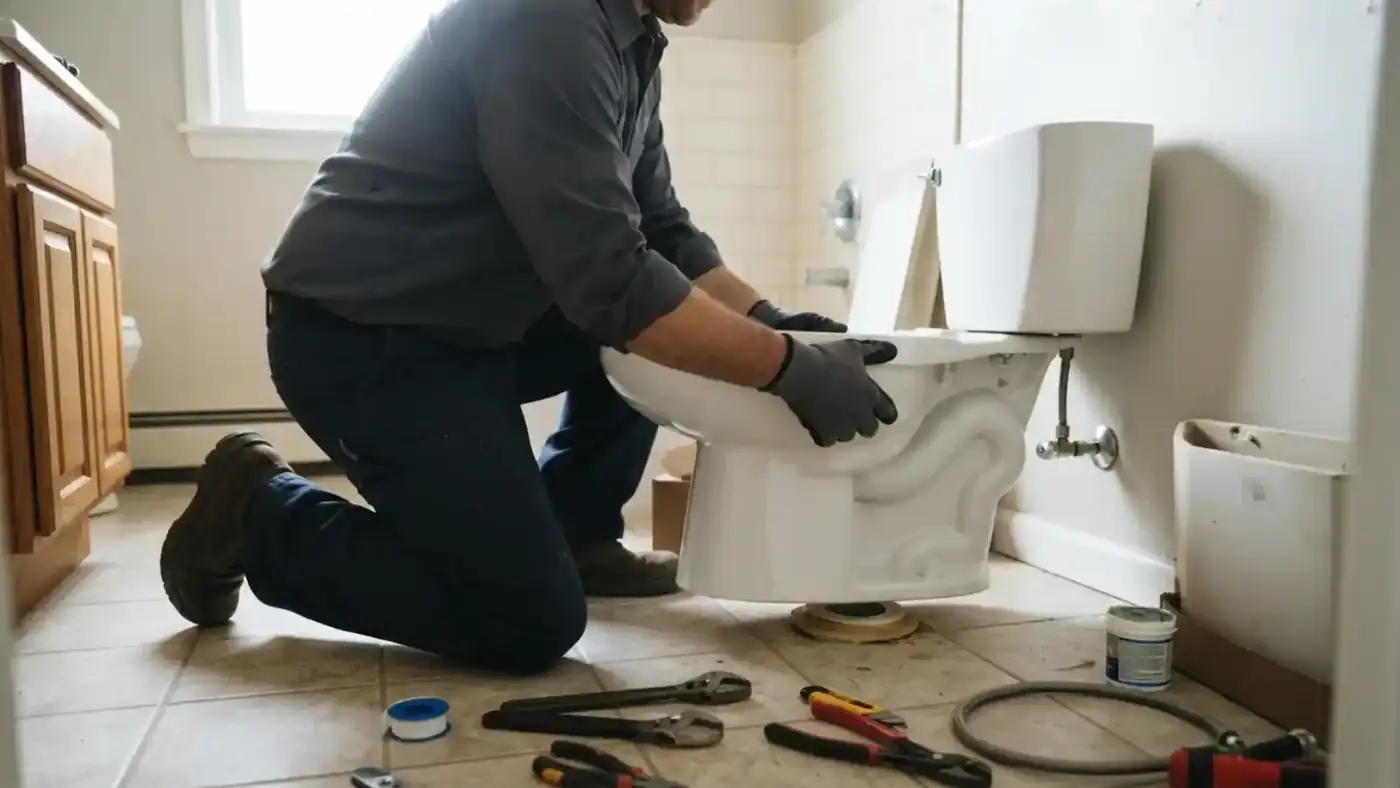
A new toilet also lets you pick a comfort height, a better flush and a water-efficient model. Installation includes a new wax ring, new supply line and a check of the flange.
Symptoms
| Symptom | Likely cause | Usual repair |
|---|---|---|
| Runs after flushing | Worn flapper or fill valve | Replace the flapper or fill valve |
| Water at the base | Failed wax ring or flange | Reset with a new ring |
| Rocks when sat on | Loose or cracked flange | Flange repair |
| Weak flush | Clogged rim jets or low tank level | Clean jets, adjust the tank |
| Slow drain with others | Drain line clog | Drain cleaning |
Toilets in Sanford homes
Many local homes sit on a concrete slab, so a toilet leak seeps into the floor rather than the ceiling below, and you may not notice it until the flooring lifts or smells. A toilet that wobbles slightly is worth checking before it turns into a bigger repair.
A fast-running toilet can quietly waste water. If your water bill is up, a toilet test is a cheap first check, and the next step is leak detection if the meter still moves.
What toilet repair costs depend on
Ask about price before work starts.
Homeowners insurance may cover water damage from a sudden overflow but not the toilet itself. Want your real number? Call (407) 964-8940.
Efficiency standards for a new toilet
Toilets sold in the United States are limited by federal standards to 1.6 gallons per flush, and WaterSense labeled models use no more than 1.28. According to EPA guidelines, labeled models are tested for performance as well as savings.
Replacing a toilet is a fixture swap and usually needs no permit, but ask your building department if the drain or the flange has to move.
Toilet Repair & Installation questions in Sanford, FL
Call and ask about availability for an overflow or active leak. Close the supply valve first, then call.
Usually the flapper is not sealing or the fill valve is not shutting off. Both are inexpensive parts, and we can usually repair it in one visit.
Yes. We remove the old toilet, check the flange, set the new one with a new wax ring and test it before we leave.
A failed wax ring or a loose toilet is the common cause. If the bowl is cracked or the flange is damaged, the repair is larger.
Close the supply valve behind the toilet. If it will not turn, shut the main water valve and call us.