
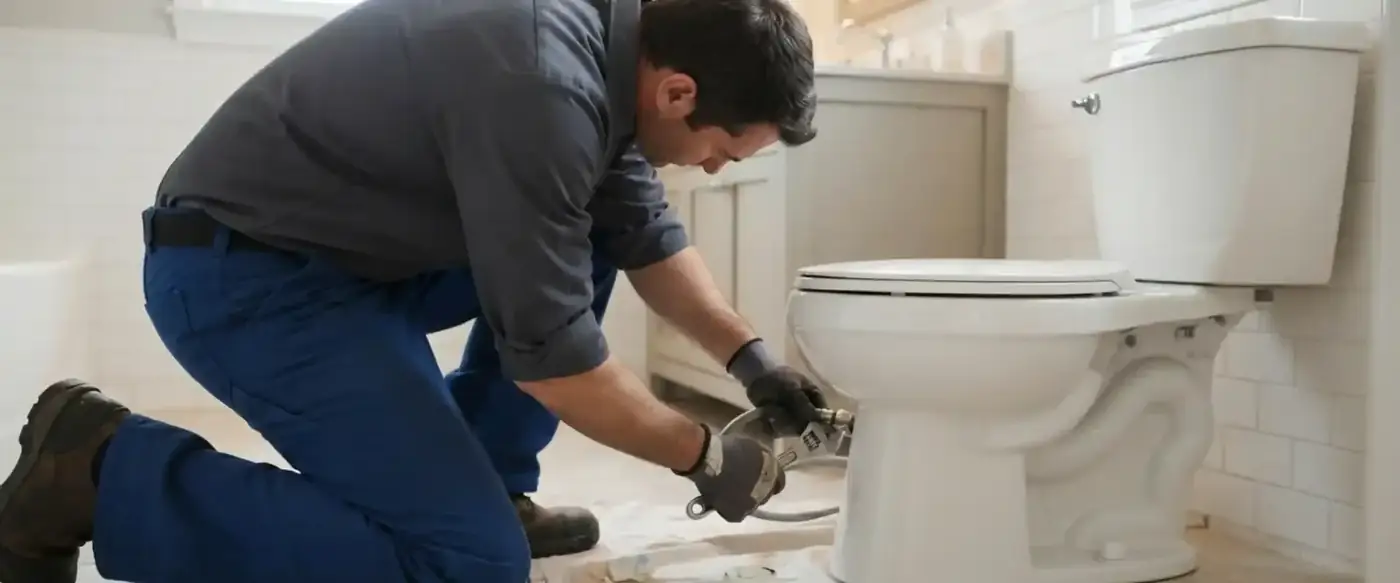
What the toilet flange does
The flange is a ring fastened to the floor around the drain opening. The toilet bolts to it, and a wax ring between the bowl and the flange seals the connection against leaks and sewer gas.
When the flange cracks, rusts or sits too low, the bolts loosen and the seal fails. Water then seeps out at the base, and you may not see it until the floor softens.
Signs of a broken flange
The toilet wobbles even after you tighten the bolts. Water appears around the base after flushing, the floor around the toilet feels soft or stains, or there is a sewer smell that returns after you reset the wax ring.
Pulling the toilet shows the answer. A cracked plastic or rusted metal flange, bolt slots that have torn out and a flange sitting below the finished floor are all signs it needs repair.
Repair ring or replacement
A repair ring is a metal or plastic plate that screws over a damaged flange to give the toilet a new surface to bolt to. It works when the pipe underneath is sound and the flange is only cracked at the edges.
A full replacement is needed when the flange is corroded through or the pipe below is damaged. On a slab, replacement may involve cutting into the floor, and that is a job for a plumber.
Why the flange height matters
The flange should sit on top of the finished floor. When new tile or flooring is added and the flange is left below it, the wax ring cannot seal, and the toilet leaks.
Spacer rings and extra-thick wax rings can raise the seal, though the lasting fix is setting the flange at the right height. We check this on every toilet we reset.
Which flange fix fits
The damage you see decides the repair.
| Problem | Usual repair | Notes |
|---|---|---|
| Cracked flange edge | Repair ring | Pipe below must be sound |
| Corroded metal flange | Replace the flange | May need floor work |
| Flange below the floor | Spacer or reset flange | Raise to floor level |
| Rotted subfloor | Repair the floor first | Then set the flange |
Check the floor before you reinstall
A long-running leak can rot the subfloor. Press on the floor around the toilet and look for dark stains, soft spots or lifted flooring.
If the floor is damaged, repair it first. Setting a new flange into soft wood only moves the problem, and the toilet will rock again. Our toilet repair and installation page explains how we reset and test a toilet.
A sewer smell is not a minor issue
Sewer gas should not enter the house, and a broken seal at the flange lets it in. If the smell remains after a reset, the cause may be a dry trap elsewhere or a vent problem.
Persistent odors and slow drains in several fixtures call for a look at the drain line, and drain cleaning covers the main line steps.
Tools and parts for the job
You need a new wax ring or a wax-free seal, closet bolts, a repair ring or flange, a putty knife, a drain plug or rag to block sewer gas and a bucket and sponge to drain the bowl. Replacement bolts come with the repair kit or can be bought separately.
Shut off the supply valve, flush to empty the tank and disconnect the supply line before you lift the toilet. Two people make lifting easier, because a toilet is heavy and awkward.
Mistakes that cause repeat leaks
Reusing an old wax ring, tightening the bolts unevenly and setting the toilet on a flange that is below the floor are the usual errors. Rocking a toilet to seat it can also crack the porcelain.
Tighten each nut a little at a time, alternating sides, until the toilet is snug and does not rock. Stop before the base cracks.
Standards for a toilet connection
The Florida Building Code, Plumbing calls for a toilet to be secured to a flange fixed to the floor with a watertight seal. Follow the guidelines on the new wax ring or seal package for the right bolts and torque.
Slab floors and toilet leaks in Sanford
Many homes in Seminole County are built on concrete slabs, so a leaking toilet seeps into the floor instead of dripping through a ceiling below. You may notice lifting tile or a musty smell long before water appears.
Homes near Historic Downtown can also have older cast iron or clay drains under the floor, which affects how a flange is attached. Ask the City of Sanford building department whether a permit applies to a drain change at your address.
If you live in Lake Mary or Longwood, see our Lake Mary page for how we cover those towns.
Questions about this in Sanford, FL
A repair ring is within reach for many homeowners. If the pipe below is damaged or the floor is rotten, call a plumber.
If a new wax ring does not stop the leak or the toilet still rocks, the flange is likely the cause.
Yes. Water can lift flooring and cause mold. Dry the area and fix the leak quickly.
Permit rules vary, so ask the City of Sanford building department about your address.