
Which metals people worry about
Iron causes orange stains and a metallic taste. Copper and lead usually come from household plumbing and fixtures rather than the source water. Manganese stains and tastes similar to iron.
Each one has a different cause and a different fix, which is why a test comes before a purchase.
Test before you buy
A certified lab test tells you what is in your water, and a home kit gives a rough idea. Ask the lab which metals they test and whether they follow a recognized method.
Sample from the tap you use for drinking, after letting the water sit overnight, and ask the lab how to collect it. Different sampling gives different answers.
Types of filters
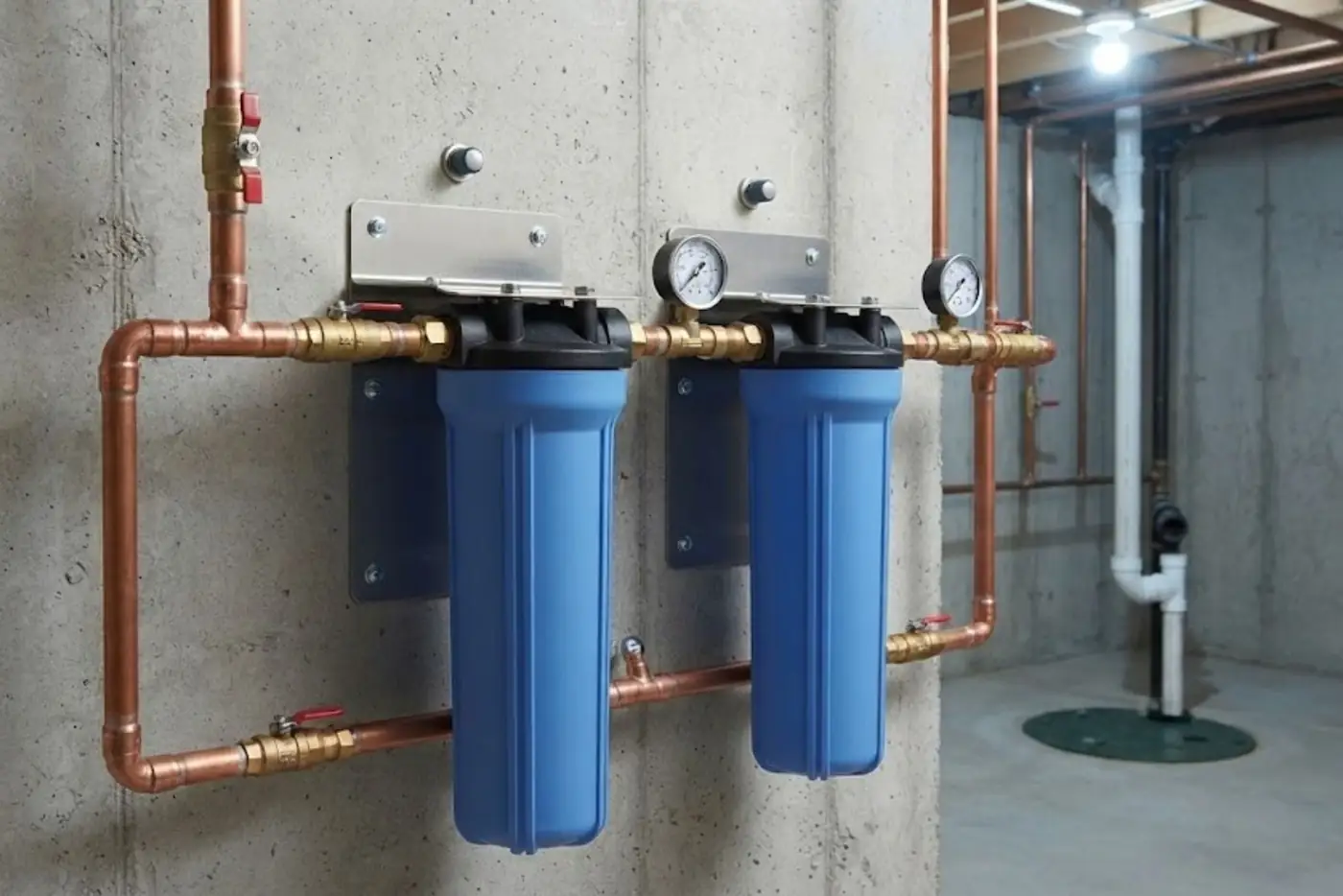
A sediment filter catches particles, a carbon filter reduces chlorine taste and some compounds and a reverse osmosis system removes many dissolved substances at a single tap. Iron filters and softeners handle iron stains for the whole house.
No single device covers everything. Pick based on test results, not a brand promise.
Lead and old plumbing
If lead is a concern, the main sources are old plumbing, solder and some fixtures, not usually the water as delivered. Run the cold water for a short time if it has sat for hours, and ask the utility about service lines.
A filter certified for lead reduction is one option for a drinking tap. Ask your physician if you have a specific health concern, because we handle plumbing and make no health claims.
Whole-house or one tap
A whole-house system treats every tap, which helps with stains and scale. A single tap filter at the kitchen sink treats only drinking and cooking water and costs less.
If your concern is drinking water, a tap-level filter often makes more sense than a whole-house unit. Our water softener and filtration page explains both.
Installation and maintenance
Filters need a bypass valve, correct pressure and regular cartridge changes. A neglected cartridge stops working and can grow bacteria on the media.
Mark the date of the last change on the housing and set a reminder. We can install and also service existing systems.
When a filter is not the answer
If lead or copper comes from your own plumbing, replacing the old pipe or fixture may be the lasting fix. A filter then is a stopgap.
Where pipe is corroded throughout, repiping solves the source of the metals instead of treating each tap.
What a filter cannot fix
A filter does not repair a corroding pipe, remove every contaminant or make unsafe water safe on its own. It treats the water that passes through it, and only for the things it is built to handle.
Do not rely on a filter as your only protection if a lab test shows a serious problem. Talk to your utility and your physician, and use the plumbing side as one part of the answer.
Cost factors in plain terms
Price depends on the type of system, how many taps it treats, the cartridge cost and installation. A single-tap filter costs less to buy and install than a whole-house system.
Ongoing cost matters as much as upfront cost. Ask what a replacement cartridge costs and how often it is needed, and add that to the total.
Questions to ask a seller
Ask which contaminants the filter is certified to reduce, by whom and to what level. Ask for the certification document, not just the marketing claim.
Ask what happens when the media is spent, and whether the unit has a bypass so water still flows during maintenance.
Testing before you buy anything
Start with a water test from a certified lab, because a filter chosen without a test is a guess. Sanford's annual water quality report lists what the utility measures at the plant, but it cannot show what your own pipes add.
A test at your tap shows metals that come from household plumbing, such as lead from old solder or copper from corroding lines. The result tells you which filter type fits and whether you need one at all.
Where certified claims come from
Look for a filter certified to an NSF/ANSI standard for the contaminant you care about, because the certification is how a claim is tested. According to the EPA, a utility must publish an annual water quality report, and Sanford's lists its own results.
What the City of Sanford reports
The City of Sanford's annual water quality report says its water comes from seventeen groundwater wells in the Floridan Aquifer and is disinfected with chlorine. For lead, it reports a 90th percentile of 0.77 parts per billion from tap sampling in 2023, with no sites above the 15 parts per billion action level.
The report does not give a hardness figure, so test your tap or ask the City of Sanford Utility Department. The city also states that it submitted an updated service line inventory to the state.
Lake Mary and Longwood have their own utilities and reports, so use the one for your address, and see our Lake Mary page and the service areas page for where we work.
Questions about this in Sanford, FL
The City of Sanford's report lists lead tap-sampling results with no sites above the action level. Ask the utility for the current report for your address.
Not unless a test shows a whole-house problem. A tap-level filter often covers drinking-water concerns.
Follow the manufacturer's schedule, which varies by model and water use.
No. Different equipment targets different metals, so the test decides.