
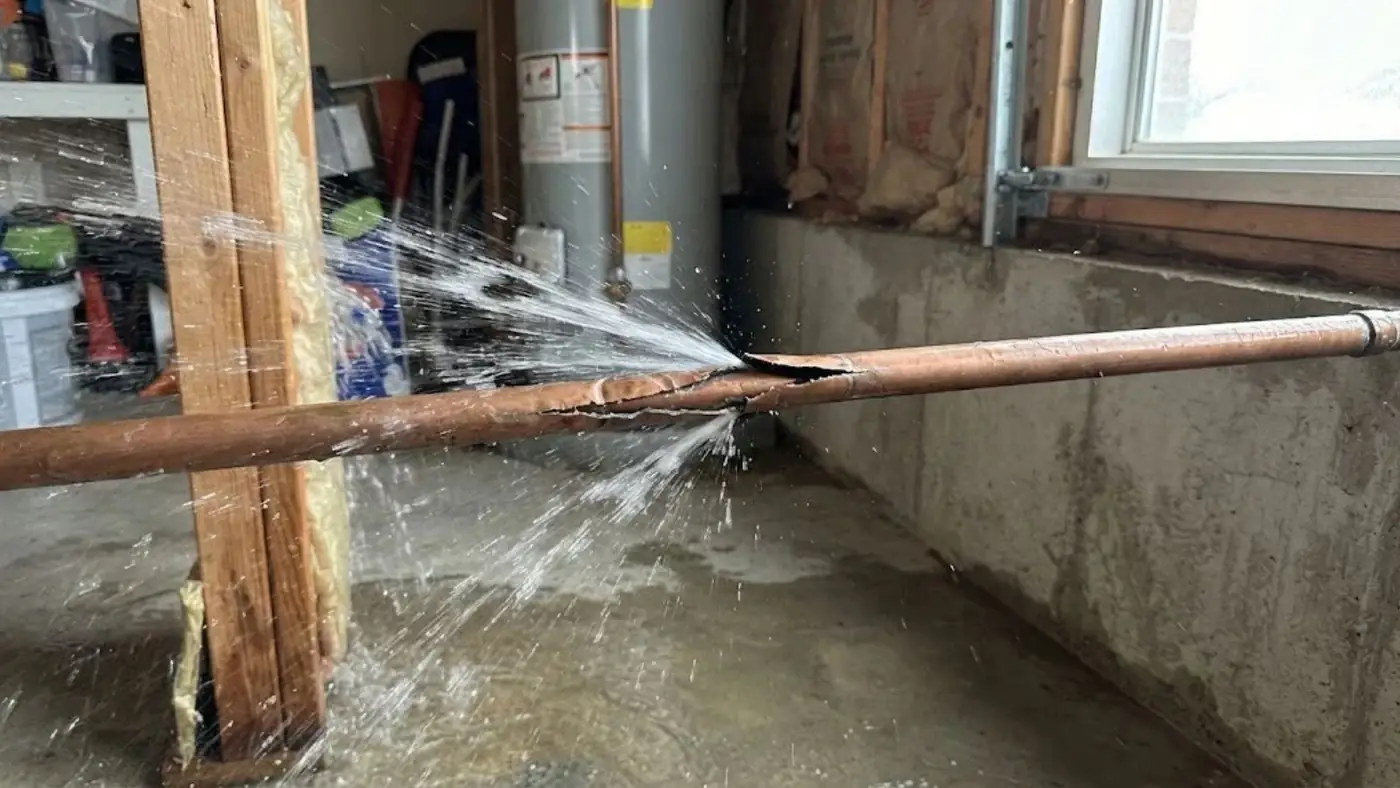
Shut off the water and the power
Find the main water valve, usually near the meter or where the line enters the house, and turn it clockwise. Open a faucet at the lowest point to drain the remaining water out of the lines.
Switch off the breaker for any room with standing water, and stay away from outlets and appliances that touch the water. Do not wade into a flooded room with the power on.
Find where the water is coming from
Look for the wet ceiling, the sagging drywall, the sound of running water or a meter that is still moving after you close the main. A leak after the meter and before the house may be in the service line, and one inside the house is in a wall, ceiling or slab.
Take photos of everything before you move anything. Insurance adjusters like to see the damage as it was.
How the repair works for each pipe type
A split in copper is cut out and a new section is joined with solder or push fittings. PEX uses crimp or expansion fittings, and PVC or CPVC uses solvent-welded couplings.
A single section of repair can solve a single failure. If the pipe is old, brittle or corroded, a larger replacement may make better sense, and our burst pipe repair page explains how we decide.
Where a burst pipe turns up
The location tells you how to respond.
| Location | First step | Who to call |
|---|---|---|
| Under a sink | Close the angle stop | Plumber |
| In a wall or ceiling | Shut off the main | Plumber, then restoration |
| Under a slab | Shut off the main and heater | Plumber with leak detection |
| In the yard | Close the meter valve | Plumber or the utility |
Why pipes burst in Central Florida
Freezing is rare here, but hard freezes do happen and can catch unprotected outdoor lines. More often the cause is corrosion, high water pressure, a failed fitting, a shifting slab or roots pressing on a buried line.
A pressure gauge on a hose bib tells you what your pressure is. Sustained high pressure shortens the life of every pipe and fixture, and a pressure regulator is an inexpensive fix.
Drying out and preventing mold
Wet drywall, insulation and flooring need to dry quickly, usually within a day or two. Fans, dehumidifiers and removal of soaked materials limit mold growth in Florida's humid air.
A restoration company can dry the structure and test moisture levels. Keep receipts and photos for your insurance claim.
Insurance and documentation
Many homeowners policies cover damage from a sudden pipe burst but not the pipe itself or gradual leakage. Ask your agent what yours covers before you start repairs.
Keep the plumber's written description of the cause and the repair. A clear record makes the claim simpler.
When the burst is hidden
A burst inside a wall, in the attic or under a slab shows up as a stain, a warm floor or a meter that will not stop. Our leak detection service locates the source with listening and thermal tools before anything is cut.
Do not open walls blindly. A small, targeted opening is cheaper to patch than a large exploratory one.
Preventing the next burst
Replace old braided supply lines, install a pressure regulator if your pressure is high, insulate outdoor lines for rare freezes and know where your main valve is. Test the valve once a year so it does not seize.
If a house has had several failures, the pipe may be wearing out as a whole. Ask about repiping before the next failure floods another room.
What not to do after a burst
Do not turn the water back on to see whether the repair worked until a plumber confirms it is safe. Do not use a vacuum to clear standing water, and do not run electric fans through wet extension cords.
Avoid cutting into walls on your own. A plumber who locates the break first keeps the hole small and the repair cost down.
Codes and permits
According to the code guidelines, replacement pipe in Florida homes has to meet the Florida Building Code, Plumbing, which is based on the International Plumbing Code. Ask the Sanford or Seminole County building office whether your repair needs a permit.
Burst pipes in Sanford homes
Many homes in Seminole County are built on concrete slabs, which puts supply lines beneath the floor or in the attic. A burst in an attic can bring down a ceiling before you hear it.
The City of Sanford's annual water quality report notes that the city maintains a service line inventory as part of its lead program. If your leak is between the meter and the house, ask the City of Sanford Utility Department who owns that section.
Lake Mary and Longwood homeowners can start with our Lake Mary page, and the service areas page explains how we confirm coverage.
Questions about this in Sanford, FL
Shut off the main water valve, switch off power to the wet area and call a plumber.
Often yes. A split section is replaced, though badly corroded pipe may need wider replacement.
Hard freezes are rare but they do happen. Most local bursts come from corrosion, pressure or fittings.
Call the water utility that serves your address. If it is after the meter, call a plumber.