Why 120 degrees is a common starting point
A setting near 120 degrees is hot enough for showers and dishes and lowers the risk of scalding. It is also easier on the heater, because lower temperatures mean less scale and lower energy use.
Check your manufacturer's manual, which may suggest a different default. The manual always wins over a general rule.
Scald risk
Water at 140 degrees can scald skin in seconds, and children and older adults are most at risk. Lowering the temperature is the simplest protection.
If anyone in the home is especially vulnerable, a lower setting or an anti-scald valve at the tap adds a layer of safety.
Dishwashers and washers
Many dishwashers heat water further on their own, so a lower heater setting often works. Some older models want hotter incoming water, and the manual says so.
If you want better cleaning from a dishwasher, check its own heating option before raising the whole house.
How tankless units set temperature
Most tankless heaters have a dial, buttons or a remote controller that sets the outlet temperature. The unit works to hit that number as flow changes.
At high flow the unit may not reach the set point, because the heating capacity is limited. That is a capacity issue, not a setting issue.
Florida inlet water and winter
Incoming water in Florida is warmer than in northern states, so the unit has less work to do. In winter the incoming water cools, and the same setting needs more heating.
If hot water seems weaker in winter, a tankless water heater service check can tell you whether it is the unit, the flow or a scaled heat exchanger.
Legionella and low settings
Very low settings can allow bacteria to grow in tank systems. Tankless systems hold little water, which lowers that risk, but recirculation loops and long pipe runs matter.
If you have a health concern or a medically vulnerable household member, talk to your physician. We handle the plumbing side.
Mixing valves and long runs
A house with a long run between the heater and the shower wastes water while the pipe fills. A recirculation pump or a second small unit can help, and a mixing valve helps keep temperatures consistent.
Our water heater repair page explains what we check when temperatures swing.
How to change the setting safely
Look at the unit's controller or dial and note the current setting. Change it in small steps, wait a few minutes and test at a tap with a thermometer.
Some units lock the setting or need the remote panel. Check the manual before you press buttons you do not recognize.
Efficiency and scale
Higher temperatures use more energy and grow scale faster. A heat exchanger coated in scale heats less efficiently and may throw error codes.
Regular flushing keeps the unit working. Ask us about a schedule that fits your water.
Signs the setting is not the problem
If the temperature swings from hot to cold, the unit may be undersized, scaled or struggling with low flow. A setting change will not fix those.
Call for service if the heater shows error codes, goes cold under moderate use or will not reach the set temperature.
Safety limits and scald risk
Hot water at 140 degrees can scald in seconds, and children and older adults are at the highest risk. Many households stay near 120 degrees for that reason, and a lower setting also saves energy.
If you have a dishwasher without its own booster, check what the manual asks for. Some machines want hotter water, and the answer sits in the appliance instructions, not in a general rule.
Recirculation and long pipe runs
A tankless heater delivers hot water fast, but the pipe between the heater and the faucet still has to fill. In a long run, the wait for hot water has nothing to do with the temperature setting.
A recirculation pump or a smaller point-of-use heater near a far bathroom can shorten the wait. Ask a plumber to look at the layout before you spend money on a different setting.
A simple way to check your output
Run the hot tap for a minute and hold a kitchen or bath thermometer under the stream. Compare the reading with the display on the unit.
If the two differ by more than a few degrees, the sensor or the mixing may be off. That is worth a service visit, because an inaccurate reading makes every other adjustment a guess.
Guidelines on safe temperature
The U.S. Consumer Product Safety Commission recommends setting a water heater to no more than 120 degrees to reduce scalds. Manufacturer guidelines for your unit show how to set the temperature and which settings lock.
Setting temperatures in Sanford homes
The City of Sanford's water report says the city's water comes from groundwater wells in the Floridan Aquifer and is chlorinated, and it gives no hardness figure. Test your tap, because scale builds faster at higher temperatures and shortens a tankless unit's life.
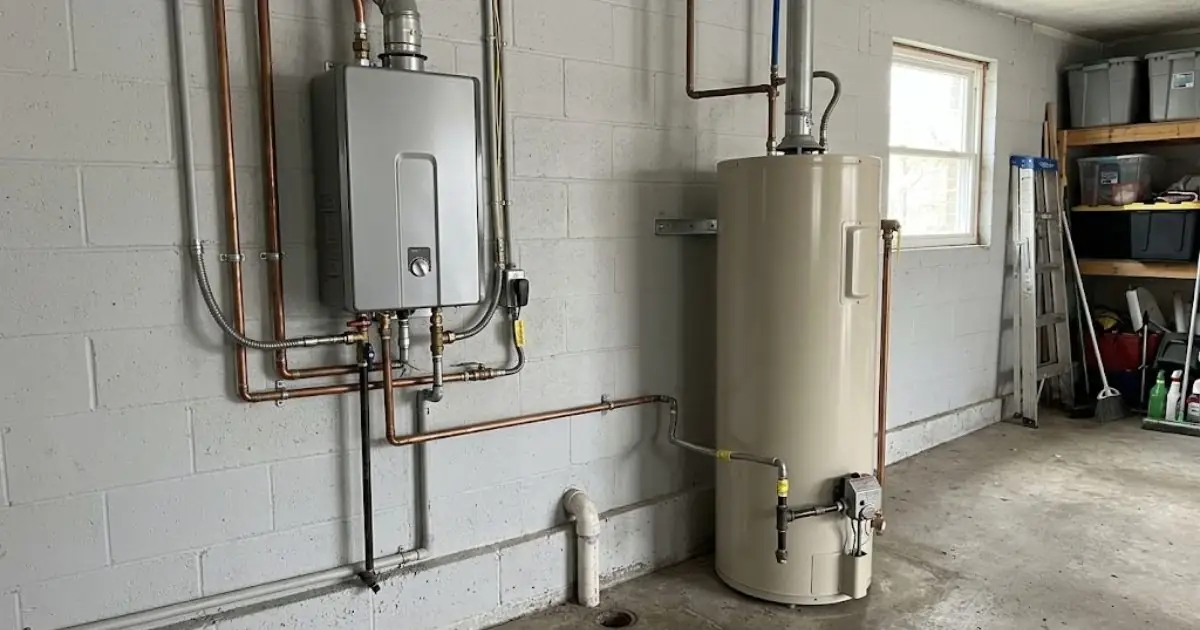
Sanford homes often put the heater in a garage, where summer heat can warm the lines and affect how the water feels. Ask the City of Sanford building department about any permit needed for changing venting or fuel.
Lake Mary and Longwood have their own utilities, and our Lake Mary page explains how we reach those towns.
Questions about this in Sanford, FL
About 120 degrees Fahrenheit is a common setting. Follow your manual and your household's needs.
Yes, generally. Lower temperatures use less energy and cause less scale.
The unit's heating capacity limits how much it can heat at once. That is a sizing question.
Usually, using the dial or controller. If the unit has error codes or will not hold temperature, call for service.