
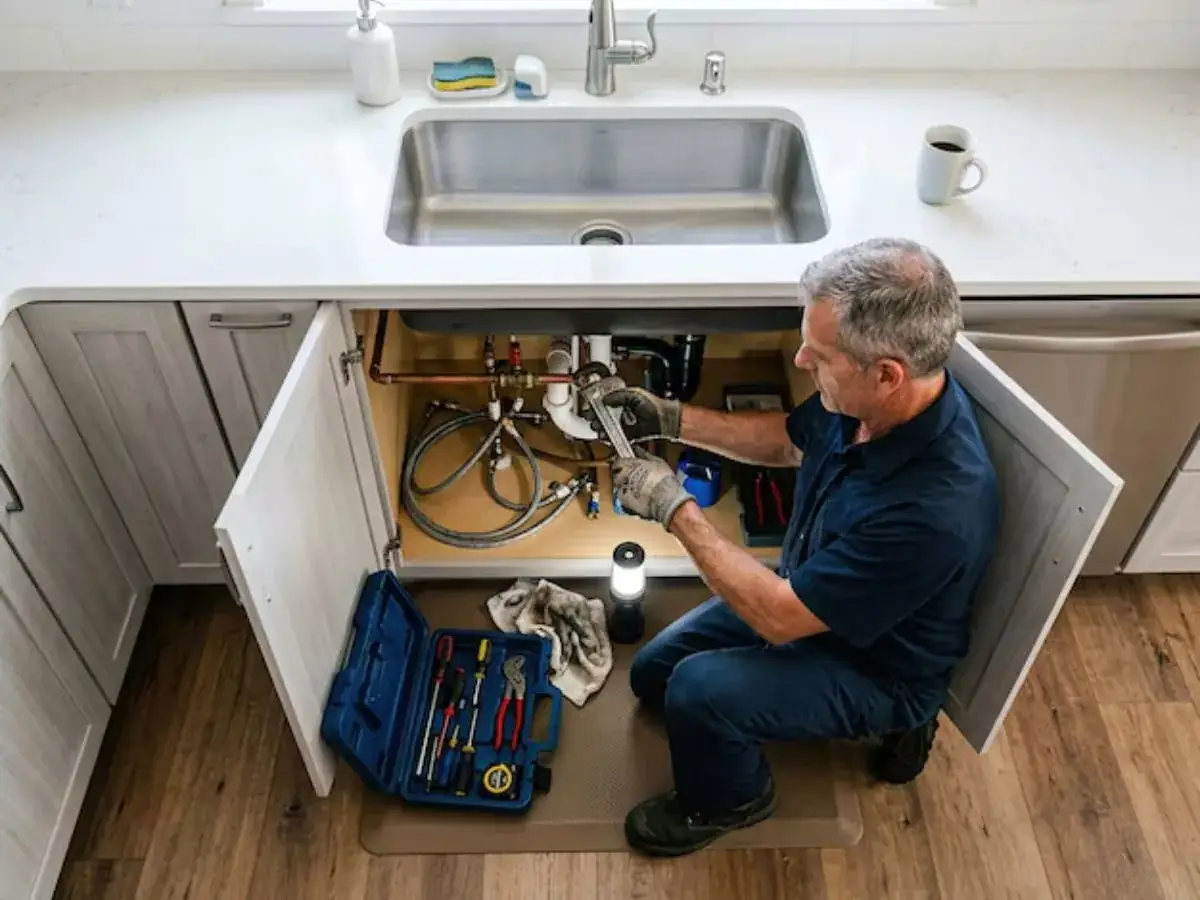
Know where your shutoffs are
Find the main water valve, the shutoff under every sink and toilet, the valve for the water heater and the cleanout for your sewer line. Label them with tape.
Turn each one a little once a year so it does not seize. A valve that has not moved in ten years often will not move when you need it.
Check under sinks monthly
Open the cabinet, look for water stains, a musty smell and drips on the supply lines and traps. Run the water and watch the connections.
A small drip now becomes a rotted cabinet floor in a few months. Replace braided supply lines every several years, because the rubber inside degrades.
Read your water meter
Turn off every fixture and look at the meter. If the dial or the flow triangle moves, water is leaking somewhere.
Do this when you go on a trip as well. If a leak develops while you are away, the meter will have told you before the bill does, and leak detection can find it.
Look after the water heater
Flush a tank heater to clear sediment, check the temperature and pressure relief valve and look for rust or moisture at the base. Tankless units need descaling on a schedule.
A heater that is old, noisy or rusty is worth planning to replace, and water heater repair explains what we check on a service visit.
Protect your drains
Keep grease out of the kitchen sink, use a hair catcher in showers and flush only toilet paper. A drain strainer in every sink stops most trouble.
Run hot water for a minute after washing dishes to move grease farther down. If drains slow down, address it early with drain cleaning before it turns into a backup.
Maintenance calendar
A rhythm that is easy to keep.
| How often | What to do | Why |
|---|---|---|
| Monthly | Look under sinks and read the meter | Catches small leaks |
| Every six months | Test the pressure relief valve and shutoffs | Keeps valves from seizing |
| Yearly | Flush the water heater | Clears sediment |
| Every few years | Replace braided supply lines and washer hoses | Prevents burst lines |
Watch pressure and hoses
Water pressure over the recommended range stresses pipes and fixtures. A simple gauge on a hose bib tells you what yours is.
Replace washing machine hoses on a schedule, shut the washer valves when you travel and check the icemaker line behind the refrigerator.
Outdoors and irrigation
Check hose bibs for drips, inspect irrigation heads and look at the meter box for wet soil. A leaky irrigation valve can run for months without anyone noticing.
A green patch that stays wet in dry weather may be a leaking line. Turn off the irrigation zone to see whether it dries up.
A simple yearly checklist
Once a year test every shutoff, flush the water heater, inspect supply lines, check the pressure and examine caulk around tubs and showers. Keep notes with dates.
A written log helps you spot trends and gives a plumber something to work from.
Signs a small problem is growing
A toilet that runs on its own, a faucet that drips, a stain on a ceiling and a musty smell in a cabinet are all early warnings. Fix them before they grow, because each one gets more expensive with time.
A water bill that climbs without a reason is the clearest sign. Check the meter before you assume it is the season.
Before a trip or a storm
Shut the main water valve if you will be gone for several days, turn the water heater to vacation mode and clear gutters and drains. After a big storm, check for leaks and look at the cleanout.
A little preparation keeps a vacation from turning into a flooded house. Ask a neighbor to check the house if you will be away for a while.
Guidelines worth following
The EPA WaterSense program suggests checking for leaks at least once a year, and a quick meter test or a toilet dye test finds most of them. Water heater makers recommend an annual tank flush and a check of the relief valve.
Maintenance notes for Sanford homes
The City of Sanford's annual water quality report says the city's water comes from seventeen groundwater wells in the Floridan Aquifer and is chlorinated. It does not publish hardness, so test your tap or ask the City of Sanford Utility Department if scale shows up on fixtures.
Older homes near Historic Downtown may have a mix of pipe from different decades, and a routine check helps you spot corrosion early. Homes on slabs have supply lines you cannot see, so the meter test matters more.
Homeowners in Lake Mary and Longwood can use the same list, and our Lake Mary page explains how we cover those towns.
Questions about this in Sanford, FL
Many manufacturers suggest yearly. Check your manual, and flush more often if the water is hard.
Usually near the meter or where the line enters the house. Find it before you need it.
Gas work, sewer lines, slab leaks and work behind walls are best left to a licensed plumber.
Shut everything off and watch the meter. If it moves, water is escaping.