
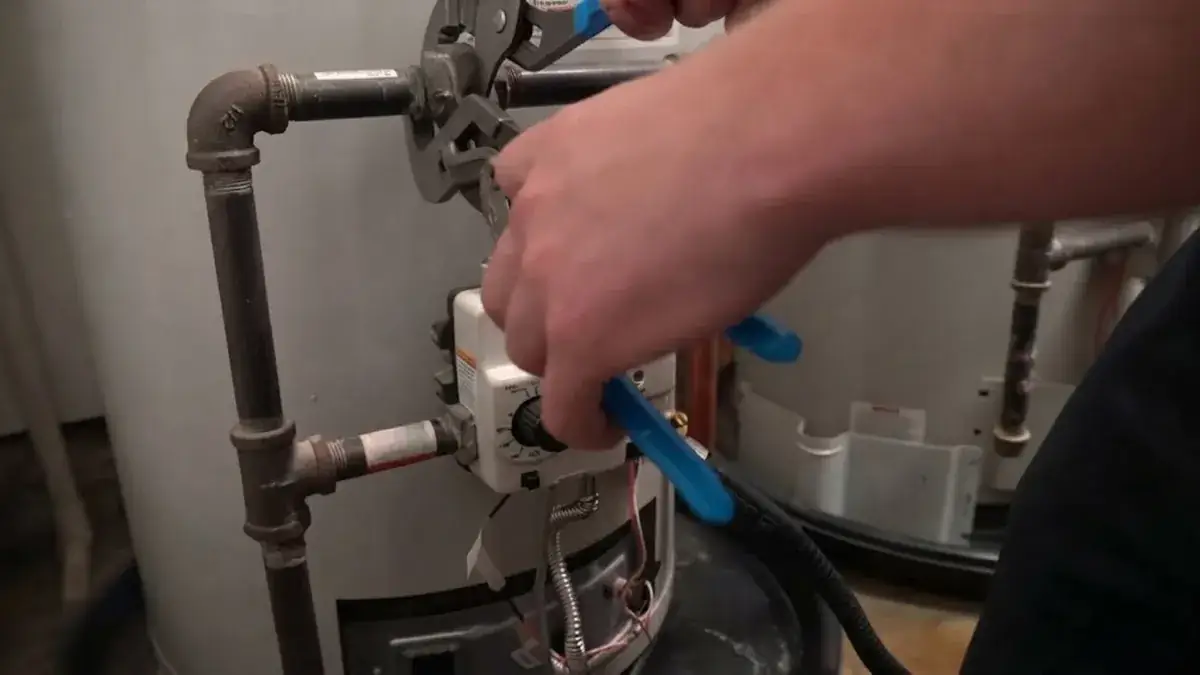
What a thermocouple does
A thermocouple is a metal probe that sits in the pilot flame. The heat generates a tiny electrical current that holds the gas valve open, and when the flame goes out the current stops and the valve closes.
That is the safety feature. Without a flame, no gas should flow, which is why a failing thermocouple shuts the heater off instead of letting it keep running.
Signs the thermocouple is the problem
The classic symptom is a pilot that lights while you hold the button and goes out when you let go. A pilot that stays lit for hours and then fails, a weak yellow flame and a heater that works for a day and quits are also common.
A weak flame can also come from a dirty pilot orifice or a drafty garage, so look before you buy a part. A blue flame that wraps the tip of the thermocouple is healthy, and a lazy yellow flame points to dirt or a draft.
Before you touch anything
Turn the gas control knob to off and wait several minutes so any gas near the burner clears. Make sure the area is ventilated, there is no open flame nearby and you can smell no gas.
Turn off the gas supply at the shutoff valve on the pipe feeding the heater. If you cannot find it or it will not move, stop and call a plumber, since forcing a gas valve is not a safe place to learn.
Thermocouple or something else?
This quick guide helps you decide what to check first.
| Symptom | Likely cause | First step |
|---|---|---|
| Pilot lights then goes out when released | Worn thermocouple | Replace the thermocouple |
| Weak yellow pilot flame | Dirty pilot orifice or draft | Clean the pilot, check the draft |
| Pilot will not light at all | No gas or a blocked tube | Check the gas shutoff |
| Burner roars or soots | Combustion or vent trouble | Stop and call a plumber |
Replacement steps in plain terms
Remove the access panel at the bottom of the heater to expose the burner and pilot. Unscrew the thermocouple's nut from the gas control valve by hand or with a small wrench, free it from the pilot bracket and slide it out.
Fit the new thermocouple through the bracket, tighten the nut finger tight and then a small turn more. Matching the part to your gas control is important, and a universal part sometimes needs the bracket bent to align the tip with the pilot flame.
Relighting and testing
Open the gas supply, turn the control to pilot and follow the instructions printed on the heater to light it. Hold the button for about a minute after it lights so the new thermocouple heats up, then release.
If the pilot stays lit, set the control to the normal temperature and watch the main burner fire. Check the connection with a soapy water solution, and if bubbles form anywhere on the gas fitting, shut the gas off and call a plumber.
When a thermocouple is not the whole story
A heater that keeps losing its pilot after a new thermocouple may have a failing gas control valve, a blocked vent or poor combustion air. Soot, a scorched look at the base or a roaring burner are all reasons to stop.
Those faults need a technician. Our water heater repair page explains what we check, and if the tank itself is old or leaking, water heater replacement may cost less than a string of repairs.
Tools and parts you need
You need a replacement thermocouple that matches your gas control, a small adjustable wrench, a flashlight, a soap and water mix in a spray bottle and a towel. Universal thermocouples exist, though the length and the fitting must match your heater.
Take the old part with you or note the heater's model number from the label. Parts counters can match them quickly, and a wrong length is the most common reason a second trip is needed.
Mistakes that cause repeat failures
Over-tightening the nut can crush the connection and cause a false failure. Bending the thermocouple tip away from the flame, leaving a dirty pilot orifice and skipping the soapy-water leak test are the other common errors.
A thermocouple that is replaced and still fails within weeks points to the gas control valve or poor draft. At that stage a technician is faster and safer than another guess.
Safety guidelines for gas work
Gas appliance work follows the manufacturer guidelines and the fuel gas rules in the Florida Building Code. If you smell gas, leave the house, do not flip switches and call the gas utility from outside.
Gas water heaters in Sanford garages and closets
Many Sanford homes keep the water heater in a garage or a utility closet. The City of Sanford's annual water quality report says the city's drinking water comes from groundwater wells in the Floridan Aquifer and is disinfected with chlorine, and it does not publish a hardness figure.
Test your tap or ask the City of Sanford Utility Department if you want the number. Sediment from mineral buildup collects in the bottom of a tank and can make a burner work harder, which is one reason older tanks lose their pilot.
For permit questions on a gas heater swap, ask the City of Sanford building department. Lake Mary and Longwood homeowners should ask their own city, and our Lake Mary service page explains how we cover those towns.
Questions about this in Sanford, FL
It is a small repair, and many homeowners do it. If you smell gas, are unsure about the shutoff or cannot light the pilot safely, call a plumber.
Many last several years, but heat and corrosion wear them down. A pilot that will not stay lit is the usual sign.
Yes. A garage door left open or a windy day can disturb the pilot, so a heater in a garage may lose its flame more than one indoors.
The gas control valve, the pilot assembly or the venting may be at fault. Call for a service visit rather than keep swapping parts.