
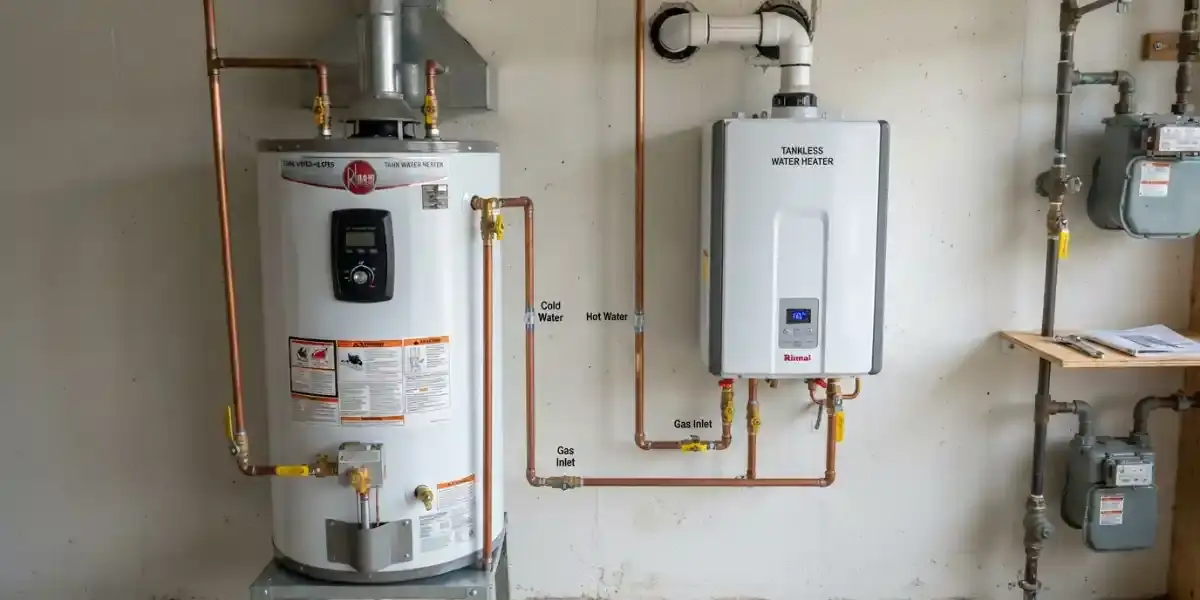
What an electric tankless heater is
An electric tankless heater has no tank. When you open a hot tap, flow sensors tell heating elements to fire, and water is heated as it passes through the chamber.
The upside is endless hot water within the unit's flow limit and a small wall footprint. The catch is power, because heating water instantly takes far more current than keeping a tank warm.
Check the electrical side first
High-capacity electric tankless heaters need several dedicated breakers and heavy wire, and many older panels cannot supply them. Read the manufacturer's installation manual for the exact circuit requirements, because they vary by model.
A licensed electrician should confirm the panel capacity before you buy. If the panel needs an upgrade, that cost can change whether tankless is the best choice for your house.
Sizing the unit to your household
A tankless heater is limited by flow, meaning the number of gallons per minute it can raise to a set temperature. Showers, dishwashers and washers running together can exceed what it delivers.
Count the fixtures you use at the same time. A larger household with two showers and a washer needs more capacity than a couple, and some homes use two smaller units to cover far-apart bathrooms.
Tank or electric tankless
Here is how the two compare for a typical Sanford household.
| Feature | Electric tankless | Storage tank |
|---|---|---|
| Electrical load | Large, several breakers | Modest, one circuit |
| Hot water supply | Continuous within flow limit | Limited by tank size |
| Space | Small wall footprint | Floor space |
| Maintenance | Scale flush | Drain and anode check |
Florida inlet water helps
Water entering a Florida home is warmer than in northern states, so a heater has less temperature rise to make. That can let a smaller unit do the job, and it also improves the useful flow.
Winter groundwater temperatures still fall, so size for the coldest day you expect. We use real flow and temperature numbers rather than guesses.
Installation and venting
An electric unit needs no gas line or vent, which makes the plumbing side simpler than gas tankless. It still needs isolation valves on the water lines so it can be flushed, a pressure relief arrangement the manufacturer specifies and secure mounting.
Placement matters too. The unit needs clearance and should be out of the way of splashing water. We cover the plumbing portion under tankless water heater service.
Maintenance and flushing
Scale from hard water coats the heating chamber and cuts performance over time. A periodic flush with a descaling solution keeps the unit working and the warranty intact where it requires maintenance.
We can pair a flush with a check of the inlet screen and the connections. If your unit has stopped heating, water heater repair covers tankless diagnosis too.
Questions to ask before you buy
Ask what the unit needs in amperage, breaker size and wire gauge. Ask what its flow rate is at your expected temperature rise and what the warranty requires for maintenance.
Also ask where it will be mounted and how water lines will reach it. A unit placed far from the bathrooms can waste water while the pipe fills, so short runs help.
When tankless is the wrong choice
A house with a small electrical panel, a short budget for upgrades or very high simultaneous demand may do better with a heat pump or a standard tank. Tankless also does not suit a home where the panel cannot be upgraded.
We say so plainly. If the numbers do not work, a conventional tank is simple, reliable and often lower cost, and our water heater installation page explains the options.
If you live north of Sanford
Homes in Lake Mary and Longwood face the same questions, and a heater that fails on a weekend is as urgent there as anywhere. Our Lake Mary emergency plumber page explains how calls from those addresses are handled.
Sanford water and what it means for a tankless heater
The City of Sanford's annual water quality report says its water comes from seventeen groundwater wells in the Floridan Aquifer and is chlorinated. It lists chlorine, fluoride and lead results and does not state a hardness figure.
That is why we suggest you test your tap or ask the City of Sanford Utility Department before you decide on flush intervals. Mineral scale is the main tankless maintenance issue, and the schedule depends on the water.
For permits on electrical or plumbing changes, ask the City of Sanford building department, or the building department for Lake Mary or Longwood if your home is there. The service areas page lists the towns we reach.
Questions about this in Sanford, FL
That depends on how many fixtures run at once and what your panel can supply. Check the manufacturer's flow ratings and have an electrician look at the panel.
For a high-capacity electric unit, usually yes. The plumber handles the water side and the electrician handles circuits and the panel.
Ask the City of Sanford Utility Department for your water report, or test your tap, then set the interval with a plumber.
It can exceed its flow limit if too many fixtures run together. Proper sizing avoids that.