
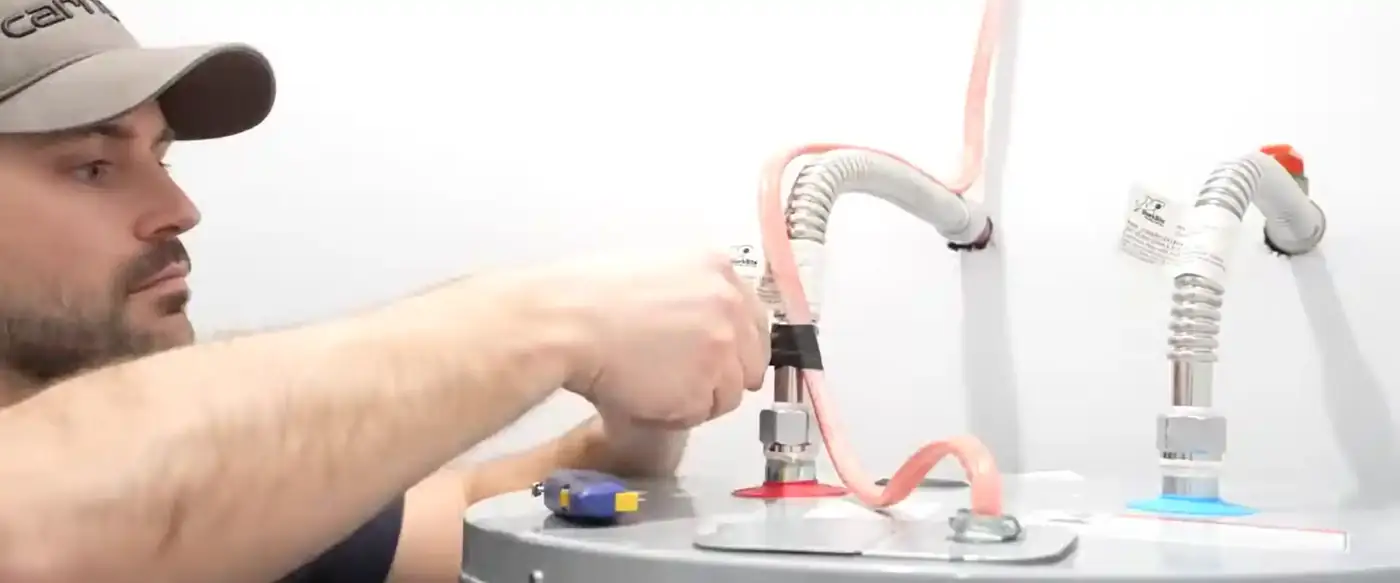
What a water heater installation includes
Draining the old tank, disconnecting water and fuel connections, setting the new unit, connecting water lines, a relief valve with a discharge line and a power or gas connection, then filling, purging air and testing.
Each step has a way to go wrong, and the consequences range from a leak to a gas problem.
Electric versus gas
Electric swaps are simpler because there is no combustion, though the power connection must be correct and the breaker off. Gas adds a gas line, a vent and combustion air, and a mistake can be dangerous.
If you smell gas at any time, leave the house and call the gas utility or 911. Gas work is where most professionals draw the line for homeowners.
The relief valve and discharge line
The temperature and pressure relief valve is a safety device. It opens if temperature or pressure gets too high, and its discharge line must run to a safe place and stay clear.
Capping or plugging a relief valve is dangerous, and a discharge line that is too small or blocked defeats it.
Permits and code
Many jurisdictions require a permit for a water heater replacement, and an inspection afterward. The Florida Building Code, Plumbing sets the base rules, and the local building department enforces them.
Doing the work without a permit can cause trouble with insurance and with a future home sale. Ask before you start.
DIY or hire
A quick comparison to help you decide.
| Job | DIY realistic? | Notes |
|---|---|---|
| Electric tank, same location | Sometimes | Power off, permit, relief valve |
| Gas tank swap | Rarely | Gas, vent and combustion |
| Attic or tight closet | No | Lifting and access risk |
| Tankless conversion | No | Gas, venting or power upgrades |
Tools and time
You need pipe wrenches, a tubing cutter or torch for copper, flexible connectors, dielectric unions, a hose, a bucket, a dolly and a helper. A heater is heavy, and lifting one alone is a way to get hurt.
Plan on most of a day for a first-time job, and expect a trip back to the store.
Where DIY goes wrong
Common mistakes include forgetting to fill the tank before turning on power, which burns out the elements, wrong relief valve discharge, loose connections that drip later and ignoring the expansion tank.
A small leak behind a heater can run for weeks. Our water heater installation page explains what a proper install includes.
When to call a plumber
Call a plumber for gas units, attic installs, relocations, fuel changes, tankless conversions and any job where the old connections are corroded. A quick swap after a failure is often best left to a pro.
If your tank is already leaking, water heater replacement explains how we handle it fast.
What a professional adds beyond labor
A plumber carries the right fittings, checks the water pressure, sets an expansion tank when the system needs one and tests the relief valve. We also verify the vent on gas units and measure draft before we leave.
Mistakes that a homeowner may not see, like a slightly backward vent slope or a loose gas fitting, are the ones that cause trouble later. A second pair of experienced eyes is the real value.
A fair way to decide
Ask three questions. Can you lift and place the tank safely, do you know where every shutoff is, and are you comfortable with the fuel the heater uses? If any answer is no, hire the job.
If you do decide to DIY an electric tank, shut off the breaker, test the wires with a tester and fill the tank completely before power goes on. Never skip the permit question.
Safety checks before you decide
Gas heaters add combustion air, venting and gas line risks. A leak or a poor vent can put carbon monoxide in the house, so install a working detector near the bedrooms whatever you decide.
Electric heaters carry a shock risk, and a tank that is not full when power comes on can burn out an element in seconds. If any step feels uncertain, stop and call a plumber.
What the code says about water heaters
The Florida Building Code, Plumbing requires a temperature and pressure relief valve with a proper discharge line on a water heater, and manufacturer guidelines set the vent and clearance rules. Water heater replacement is permitted work in most jurisdictions, so ask before you start.
Permits and water heaters in Sanford
Permit rules vary, so ask the City of Sanford building department what applies to a water heater swap at your address. Lake Mary and Longwood have their own departments.
Many Sanford homes keep the heater in a garage or closet, and a leak or a failed relief valve can damage stored items quickly. The City of Sanford's water quality report does not publish a hardness figure, so test your tap if you want to plan for sediment.
Our Lake Mary page and the service areas page explain where we work if you decide to hire help.
Questions about this in Sanford, FL
Rules vary, so ask the City of Sanford building department about permits and owner work for your address.
It can save labor, though mistakes, permits and tools add cost. A leak or a failed install can cost more than the labor you saved.
For gas units it is combustion and gas leaks. For all units, an incorrect relief valve or loose connection.
A like-for-like swap is usually a few hours.